
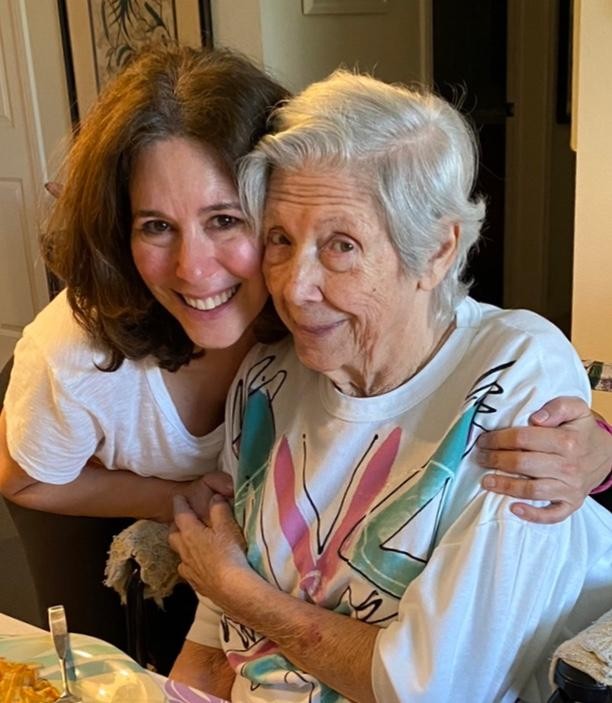
Linda Wolff recounts the emotional experience of hearing her mother’s distressing cries as she became lost within her own mind, feeling as though she lived in a haunted house. She would forget turning on the television and become startled by familiar artwork. At times, she feared her nurse, a former trusted companion. The woman who dispelled Linda’s childhood fears now needed help with her own.
As if coping with a stroke and lung cancer was not challenging enough, her mother’s Alzheimer’s pushed the family to their limits. Linda’s daughter worried if her grandmother would recognize her. Every two weeks, Linda and her sister would visit their mother, managing her mail, bills, groceries, and appointments while she napped. Each time, she seemed to fade further away.
Conversations became increasingly difficult. Handling tasks together, such as bills, would leave both exhausted and sometimes teary. Despite past conflicts, her mother’s declarations of love were sincere and grounding.
Two Mother’s Days prior, her mother was sharp and unfiltered, offering memorable one-liners that amused them both. “She’s not the sharpest pencil” was a favorite, and they believed humor would protect against Alzheimer’s. However, the isolation of COVID accelerated her decline.
Linda’s adult children were spared witnessing the deterioration, as their grandmother avoided video calls. The late afternoon ‘sundowning’ was especially distressing, causing confusion and agitation. Attempts to reason or correct her mother often backfired.
“Do you think I forgot Thanksgiving?”she asked once in April, misunderstanding space and time.
Linda shifted calls to mornings after that painful misunderstanding. Online resources, like those from the Alzheimer’s Association, described Alzheimer’s as a blackboard slowly erased backwards. This analogy helped Linda meet her mother in her reality.
Approaching too quickly startled her mother, so Linda adapted her approach. Simple, familiar routines and sentences proved effective. Music, especially Barbara Streisand and the Bee Gees, brought her mother back to familiar places.
Even as her mother’s speech faded, her presence brought comfort. Her tone meant more than words. On Linda’s birthday, thoughtful gestures like notes helped jog her mother’s memory, though often via facial recognition rather than names.
A poignant YouTube video Linda watched became her inspiration. In it, a daughter asked her mother if she knew who she was. Her mother didn’t recognize her but affirmed her love. This sentiment became Linda’s guiding principle.
Since her mother’s passing, Linda dreams of her as young, vibrant, and full of life. Alzheimer’s might have dimmed her memory, but in her dreams, love remains vivid and untouched.
Linda Wolff, based in Los Angeles, is an essayist whose work has appeared in The Boston Globe, The Washington Post, Los Angeles Times, and others. Follow her on Instagram @carpoolgoddess when not occupied by her Goldendoodle. All views are her own.
Have a personal essay for Newsweek? Send your story to [email protected].