
The plan to auction over 100 artifacts from the Titanic wreckage is facing opposition from the U.S. government. According to newly unsealed court documents, RMS Titanic Inc., the company with exclusive salvage rights to the wreck site in the North Atlantic, intends to sell personal items, currency, and kitchen and decor items. These are artifacts previously agreed to be exhibited in museums and traveling shows only.
RMS Titanic’s Proposed Auction
Georgia-based RMS Titanic Inc. has suggested auctioning the artifacts and showcasing them on an international tour across four cities. The locations of these exhibitions remain undisclosed. Among the items listed for sale are a bronze cherub, a gold nugget necklace, and a heart-shaped pendant.
The National Oceanic and Atmospheric Administration (NOAA) is representing U.S. interests regarding the wreck site. NOAA asserts that the proposed sale contravenes RMS Titanic’s legal commitments to the site. The position is based on documents unsealed earlier this month.
While opposing the auction, the government has noted that RMS Titanic Inc. claims no need for court approval for the sale. They assert their freedom to sell the artifacts.
Representatives of RMS Titanic Inc. have not commented, although their attorneys argue the auction does not breach existing agreements and court orders concerning the artifacts.
The Journey of Titanic Artifacts
Since 1987, thousands of items have been recovered from the Titanic, including parts of the hull. Though RMS Titanic Inc. profits by displaying these artifacts, efforts to sell them for funding expeditions or resolving financial difficulties have been consistently challenged by courts, preservation groups, and victims’ families.
Some items rescued or retrieved from the Titanic by survivors or rescuers can be legally sold and usually fetch substantial sums. For example, in April, a life jacket from the Titanic sold for $906,000 at an auction in London. Similarly, a lifeboat seat cushion sold for $527,000.
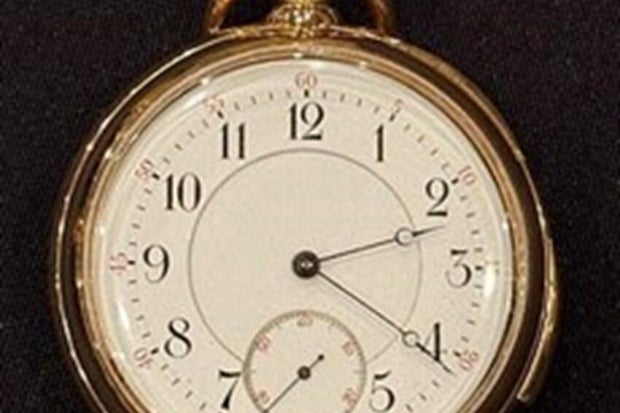
In 2025, a collector paid over $2 million for a gold pocket watch gifted by Ida Straus to her husband, Isidor Straus, an American businessman and Macy’s owner, who was a first-class passenger on the Titanic.
Other items sold include a menu from an early meal, a launch ticket, and a water-logged letter from Oscar Holverson, an American passenger. A violin believed to have been played on the Titanic was sold for $1.45 million in 2013.
Trans-Atlantic Dispute Over Titanic Artifacts
RMS Titanic Inc. wishes to auction artifacts first salvaged from the wreck taken to France, where ownership was granted to the salvager. The French oceanographic institute IFREMER uncovered the wreck with Woods Hole Oceanographic Institution.
Besides, items saved during subsequent expeditions led to a salvage claim in a U.S. District Court in Norfolk, Virginia. NOAA insists all items, whether claimed in France or the U.S., should remain as one collection as dictated by U.S. court guidelines.
On its website, NOAA notes that French court conditions demand the artifacts remain unsold individually and stay part of one collection.
RMS Titanic Inc. contests that the U.S. court lacks jurisdiction over items claimed in France. French government representatives have yet to respond.
Public Interest and Display
Some ocean explorers argue against selling Titanic artifacts, asserting public display is more beneficial. Greg Stone, an ocean scientist and explorer, believes that careful recovery using proper archaeological methods is acceptable and favors nonprofit ventures.
Richard Daynard, a Northeastern University law professor specializing in public interest advocacy, explains that regulations for displaying and selling Titanic artifacts serve the public. He cautions against wealthy individuals acquiring them as trophies.
Daynard insists artifacts should not be a means for billionaires to boast about multimillion-dollar acquisitions from the Titanic.