
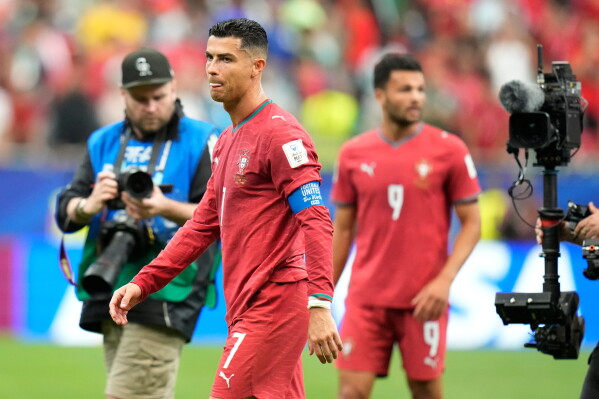
The World Cup is witnessing an unprecedented scoring surge. This tournament already stands out as one of the highest-scoring in history, with goals increasing by nearly 25% compared to the same number of matches in the previous World Cup.
Ball Innovations and Game Dynamics
A significant factor in this goal-scoring frenzy is the ball designed by FIFA for the tournament. Deep seams in the ball contribute to optimal in-flight stability, resulting in higher speeds. Player feedback supports this notion, as they note the high velocity at which the ball approaches goalkeepers. Enhanced grip ensures effectiveness in wet or humid conditions.
“This ball is as fast as a cannonball. If kicked precisely, it’s very tough to save,” said Austria coach Ralf Rangnick.
Games now feature longer durations due to hydration breaks, allowing teams more scoring chances. This World Cup’s participant expansion to 48 teams has also created wider talent disparities.
Colombian coach Néstor Lorenzo remarked on the World Cup’s scoring volume, citing the event’s talent pool and recent improvements in offensive player protection by referees.
“Defenders can face challenges against top attackers, given today’s protection norms,” Lorenzo explained.
Scoring Statistics
In the initial 40 games, fans have enjoyed 121 goals. Many goals come from globally recognized talents, especially Premier League players.
More than half the tournament’s goals stem from players in England, Germany, and Spain. The English Premier League is at the forefront.
A recent match between the Netherlands and Sweden showcased this, ending with a 5-1 result for the Dutch, where all scorers were Premier League athletes from the 2025-26 season.
“The Premier League intensity surpasses this World Cup, yet these matches remain thrilling,” shared Brazil and Arsenal player Gabriel Martinelli.
Top clubs like Real Madrid, Inter Miami, and Liverpool have been instrumental in the goal tally, led notably by Lionel Messi from Miami with five goals across two matches.
Club Contributions
When FIFA announced the squads, they included 200 players from England, nearly double Germany’s 109.
The goals recorded align with club affiliations at the squad announcement. Real Madrid players have contributed significantly, with seven goals from stars like France’s Kylian Mbappé and Brazil’s Vinícius Júnior.
Liverpool’s Dutch players added multiple goals, complimented by other contributions from Sweden, Egypt, and more.
Bayern Munich saw four goals, credited to stars from England, Germany, and Colombia. They rank second in player representation, with Manchester City leading.
A Glimpse at Future Records
The present tally of 121 goals across 40 matches yields an average of three goals per game. Only three matches concluded in 0-0 draws, while eight goals were own-goals.
With the current pace, the tournament could break the Qatar record of 172 goals set in 2022. Despite different formats (64 matches in 2022 versus 104 in 2026), this year’s projections for a 64-match span anticipate 194 goals.
Increased scoring isn’t exclusive to the World Cup. The UEFA Champions League has hit record averages too, with goals per game reaching as high as 3.47 in recent seasons.