
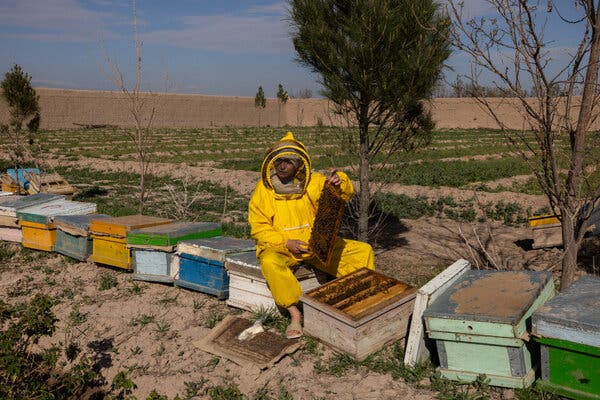
In Afghanistan, secondary education and most job opportunities are inaccessible for women under Taliban rule. This situation has driven thousands of Afghan women to entrepreneurship as a means to earn money and maintain social connections.
A notable example is Ghoncha Karimi, a 36-year-old beekeeper from Herat City, who is among the women leading this entrepreneurial wave. Despite tight restrictions, the Taliban permit women to start businesses, provided they adhere to strict regulations to avoid economic isolation.
According to the Afghanistan Chamber of Commerce and Industry, over 10,000 Afghan women currently hold business licenses, marking a tenfold increase in five years. The World Bank estimates an additional 120,000 women operate businesses without licenses, making small businesses a significant source of employment for Afghan women.
However, this increase in business activity doesn’t compensate for women’s narrowing opportunities. With their dreams of becoming lawyers, engineers, or professors out of reach, many have pivoted to careers in carpet weaving, cosmetics, or vocational training. They are barred from working in government roles or for numerous nonprofits. Furthermore, women cannot operate beauty salons, study midwifery or nursing, or communicate with male clients, suppliers, or banking officials.
The vast majority of Afghan women remain out of the workforce, with less than 7 percent employed as of 2024 according to the U.N. Development Programme. Those who are employed face substantial challenges, including harassment and arrests by morality police, which sparked a rare public protest in June.