
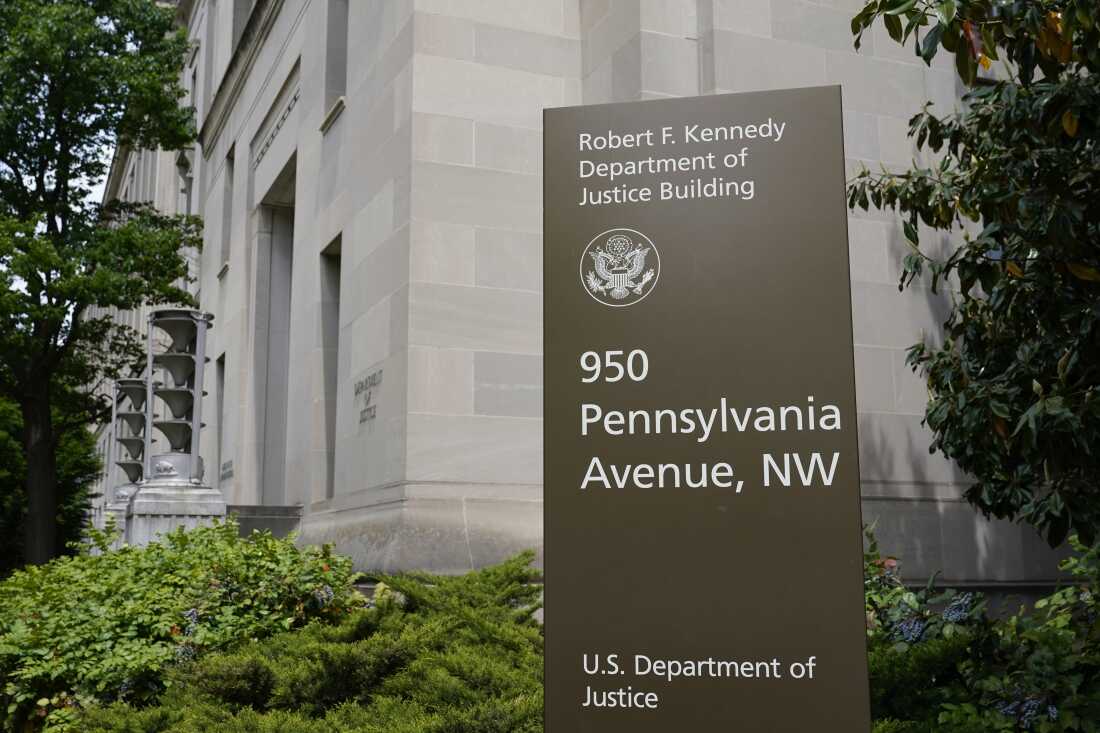
The Justice Department released a memo this week raising concerns among disability advocates. This memo questions longstanding civil rights protections, sparking fear and anger.
The memo, an opinion from the Office of Legal Counsel, suggests states might not need to provide in-home or community-based care for disabled individuals. These services are crucial for many to live in their communities.
“It is now the position of the United States government that people with disabilities don’t have a right to be part of their communities,” says Alison Barkoff, a health law and policy professor at George Washington University.
Advocates worry that without federal enforcement, states may revert to segregating disabled individuals in institutions rather than integrating them into communities.
The advocacy group, the American Association of People with Disabilities, criticized the memo, saying it threatens progress and risks returning to past practices.
Shira Wakschlag from The Arc of the United States remarked, “People with disabilities shouldn’t be forced into institutions.” This concern stems from fears states might cut back on community services.
Legal Concerns
The memo challenges what many believed to be settled law. According to experts, Section 504 of the Rehabilitation Act and Title II of the Americans with Disabilities Act require states to offer services in the most integrated settings possible.
In 1999, the Supreme Court’s decision in Olmstead v. L.C. reinforced that states must integrate disabled Americans into their communities.
By 2023, roughly 8.4 million people were receiving community-based services. But the new memo suggests that the federal law’s “integration mandate” might not be as clear-cut as previously thought.
Potential Impact
This shift in the Justice Department’s stance marks a significant change, according to Barkoff. There are concerns that the federal government signals a return to placing disabled people in institutions.
Jennifer Mathis of the Bazelon Center for Mental Health Law pointed out the impact on personal liberty for those institutionalized, saying, “their life is literally a hallway.” This highlights the restrictive nature of institutional settings.
The timing is critical as a new legal case, Texas v. Kennedy, could challenge the integration mandate. The Justice Department’s memo supports plaintiffs in this case, but Mathis emphasized that the memo isn’t law; Congress makes laws.
Historical Context
In July 2025, President Trump issued an order to address homelessness through involuntary institutionalization. This aligns with the Justice Department’s memo and its implications for federal disability law.
The Cicero Institute, a conservative think tank, has pushed for institutionalization as a solution to homelessness. The memo suggests that federal laws mandating community services contributed to homelessness, a point contested by experts.
Moreover, the current shortage of specialized facility beds is a barrier to implementing such institutionalization.
Policy Changes
Recent Medicaid cuts, driven by political decisions, compound the issue. These cuts threaten funding for community-based services and may lead states to rely more on institutional settings.
Disability advocates also fear changes in the administration of special education programs. Moving these programs from the Department of Education to the Department of Health and Human Services could impact civil rights enforcement.