
Americans are divided in their views on how to handle relations with Iran, as highlighted by a recent survey. According to the findings of the Reagan Institute Summer Survey, 39% of participants favor a negotiated settlement with verifiable limits on Iran’s nuclear and missile programs. In contrast, 36% support regime change favoring a government more aligned with U.S. interests.
There is also a portion, 16%, of the population that supports a weakened Iranian regime which maintains its current government but is reduced militarily and economically. Another 8% remained unsure about their stance on the best approach.
The survey was carried out prior to the signing of a memorandum of understanding between President Donald Trump and Iran, which included a 60-day ceasefire and the reopening of the Strait of Hormuz.
The results point to a significant political challenge for Trump as he seeks to implement this newly signed agreement with Iran. The memorandum aims to curb Iran’s nuclear pursuits through negotiation, yet public opinion remains split on the U.S.’s ultimate goal.
Examining party lines, Republicans in the survey expressed a strong preference for replacing Iran’s government, favoring this by a 2-to-1 margin over diplomatic solutions. Within the Republican respondents, half would like to see Iran’s current administration replaced, while 25% support leaving Iran’s government in place in exchange for nuclear limitations. Among self-identified MAGA Republicans, 51% favor regime change compared to 25% who back negotiations.
Democrats, in contrast, largely endorse diplomacy, with 52% supporting a negotiated settlement and 25% advocating for regime change. Additionally, 14% would prefer Iran’s current regime remain but be significantly weakened.
This survey, conducted between May 26 and June 3 with 1,555 nationwide respondents, has a margin of error of plus or minus 2.5 percentage points. The methodology combined telephone interviews, online panels, and text-to-web responses. An oversample of 331 MAGA Republicans under 30 was included, featuring a margin of error of plus or minus 5 percentage points. Data was weighted for demographics including age, gender, race, region, and education levels based on the U.S. Census Bureau’s 2023 American Community Survey.
The Reagan Institute, based in Washington, promotes a foreign policy of “peace through strength” consistent with Reagan-era values.
The survey results emerge as Trump stands by his memorandum with Iran, which he argues can lower tensions and pave the way for a broader agreement that addresses Iran’s nuclear capabilities. The memorandum sets a 60-day negotiation timeframe for a more comprehensive deal and aims to restore commercial shipping in the Strait of Hormuz. It also provides limited sanction waivers linked to ongoing negotiations.
Contentious issues such as the long-term status of Iran’s nuclear agenda are expected to be discussed in future talks. President Trump describes the arrangement as a strategy to prevent broader conflict while negotiating a “great settlement” with Tehran that stabilizes energy markets and constraints nuclear activities.
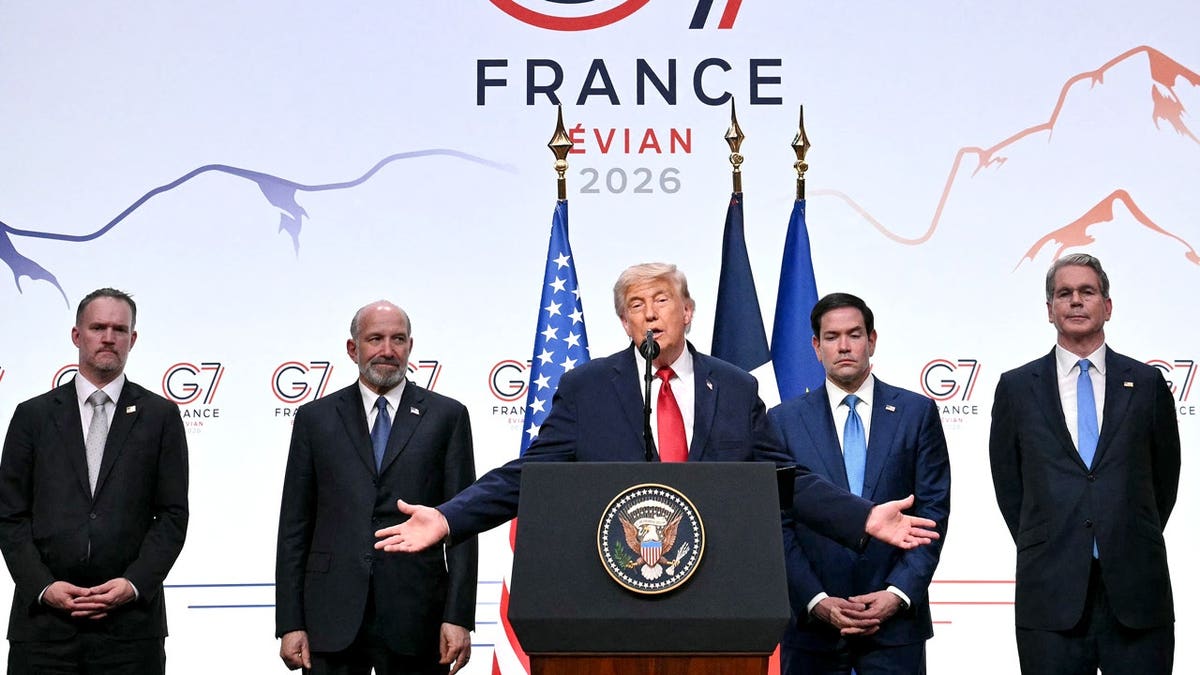
At the G7 Summit in France, Trump emphasized that avoiding an “economic catastrophe” was key in agreeing to the settlement. “If you kept this going, that could have happened,” Trump remarked to reporters.