
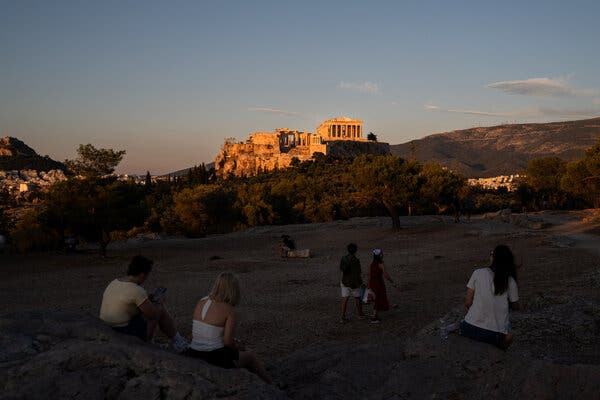
The Parthenon, a masterpiece of Classical architecture located in Athens, has undergone significant restoration. For the first time in over 220 years, the temple’s western facade is now in its most intact form. This restoration was announced by the Greek Ministry of Culture on Thursday.
Built in the 5th century B.C., the Parthenon stands as a tribute to the goddess Athena. It was originally constructed with white marble and embellished to demonstrate Athens’ prosperity. The temple’s two triangular pediments, set atop massive fluted columns, were originally adorned with sculptures depicting mythical scenes. These included statues of Greek gods and panels showing centaurs fighting humans.
In the early 19th century, Lord Elgin, a British aristocrat, removed many of these sculptures while serving as an ambassador to the Ottoman Empire. Known as the Elgin Marbles, these artifacts were later sold to the British government and are currently housed in the British Museum.
Since 2021, there have been ongoing discussions between the British Museum and the Greek government regarding the potential return of these sculptures to Greece.
The Acropolis, where the Parthenon resides, attracts millions of visitors annually. To address overcrowding, Greece introduced a cap on the daily number of visitors to the Acropolis in 2023.
The restoration of the western pediment, which started in 2017, was conducted by the Acropolis Restoration Service, a division of the Greek Ministry of Culture.