
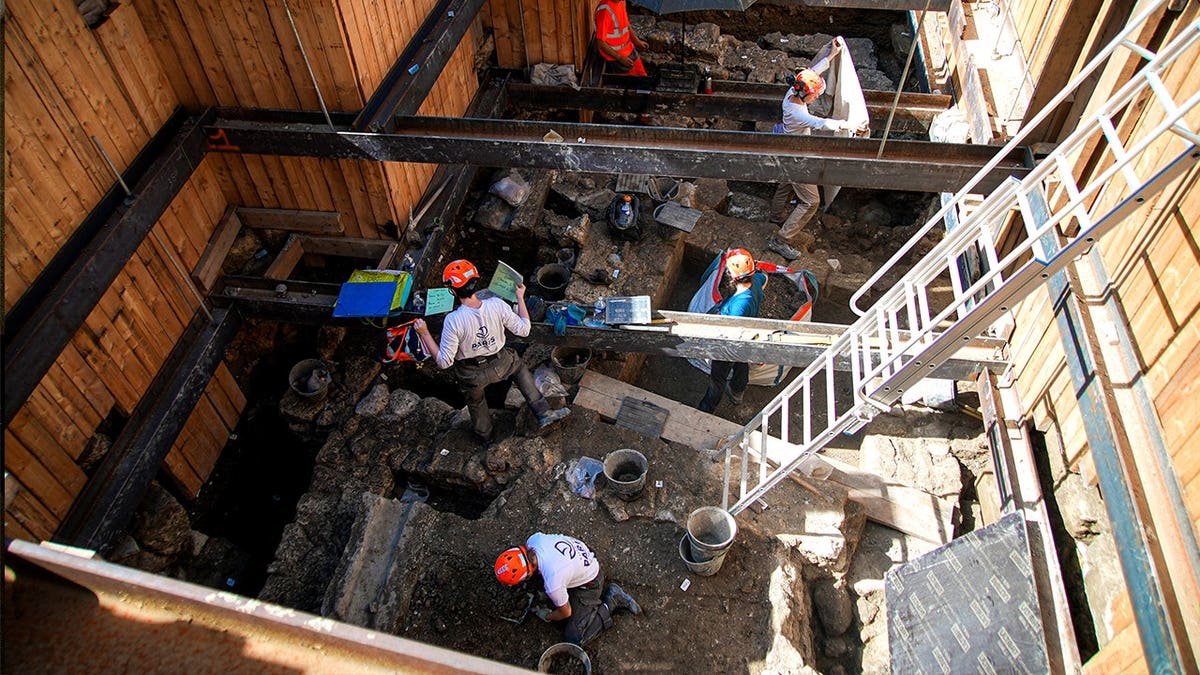
Archaeologists working at Notre Dame Cathedral in Paris have made significant discoveries, unearthing artifacts buried for centuries. This includes a Roman coin dating back 1,700 years and mysterious markings that have baffled experts. The excavation follows the 2019 fire that damaged the iconic structure, allowing experts to explore deeper into the site’s history.
The dig commenced in the forecourt of the cathedral, reaching approximately 13 feet below the ground to uncover historical remnants. Among the intriguing finds is a 4th-century coin featuring Emperor Constantine’s likeness, along with medieval pottery fragments bearing undeciphered markings.
It’s rare to find complete ceramics,archaeologist Valentine Breloux explained, noting the surprising reddish markings within some of the pottery pieces.
The excavation, described by French media as the “dig of the century,” has revealed numerous other artifacts. These include whole jugs and cups discarded in a latrine, which also served as a garbage pit.
The site also holds medieval grain pits, dating from the 6th to the 10th centuries, which were used to store harvested grain. Additionally, a Roman-era doorstep was uncovered, repurposed as road paving material.
Lucie Altenburg, a conservator, sees the project as a rare chance to delve further back into Paris’ history. She emphasizes the potential to reveal how past Parisians lived through the artifacts unearthed beneath the cathedral.
The Roman discoveries hold particular importance for archaeologists, though the team remains eager to find evidence of earlier civilizations, such as the Gauls. Archaeology student Yasmine Benali remarked that the layers uncovered represent different eras of Paris’ history, from medieval to Roman times.
Currently, the excavation is part of a broader redevelopment project for the Notre Dame square, anticipated to feature trees and enhanced visitor amenities by 2028. The restoration and excavation efforts continue to captivate people worldwide.
Emily Carter, a tourist from Manchester, expressed how the excavation breathes life into Notre Dame, as it reveals the historical city beneath the present-day landmark.