
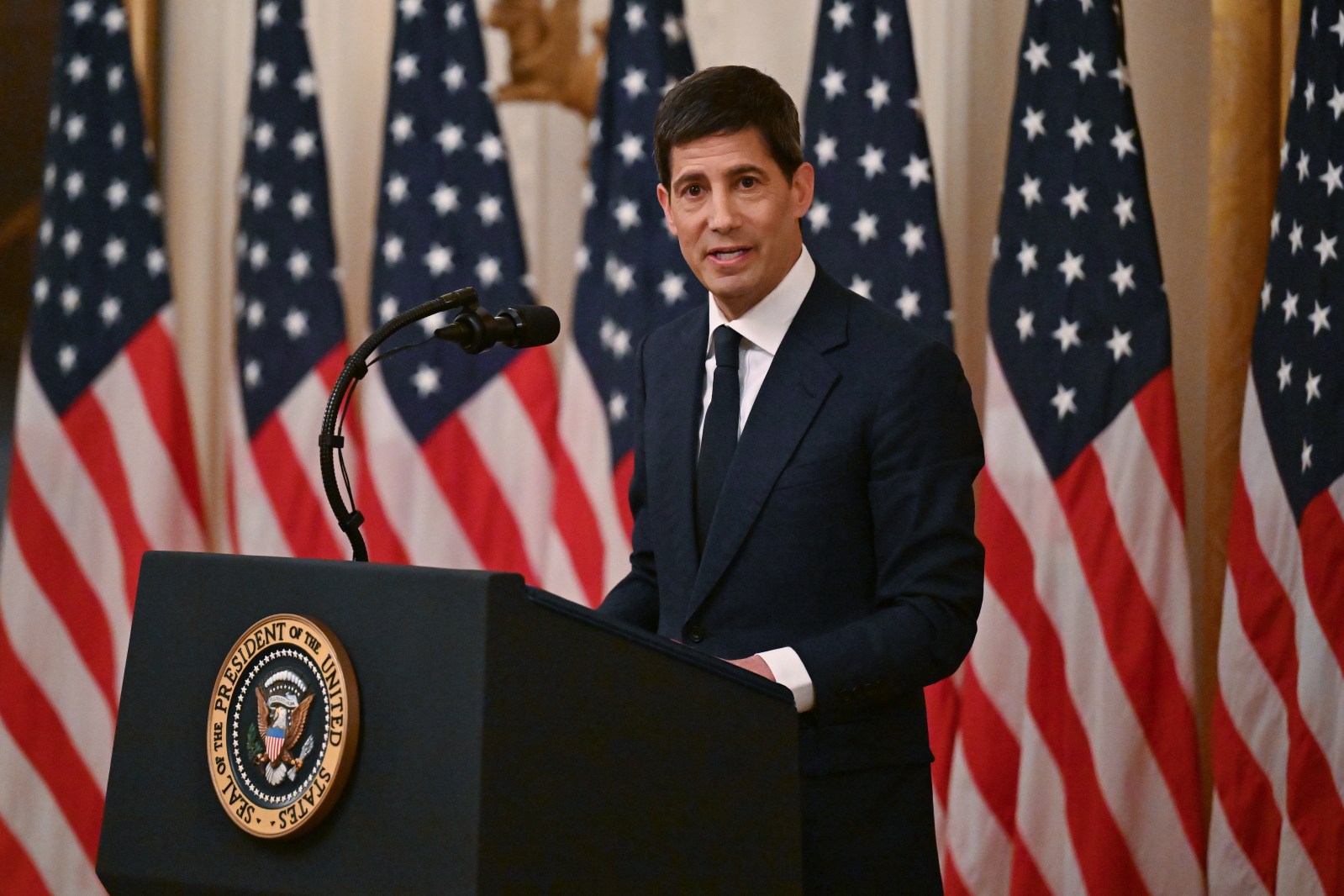
The Federal Reserve has decided to keep interest rates steady, marking the first significant policy choice under new chair Kevin Warsh. This decision sets the tone for the U.S. economy going forward. Policymakers face a critical challenge in balancing ongoing inflation pressures with economic uncertainties. Warsh’s decision is under scrutiny as Americans grow increasingly concerned about living costs and economic direction.
Currently, half of the Fed’s policymakers are open to a potential rate hike later this year. Quarterly projections reveal that nine out of 19 officials now support higher rates, a notable change from previous forecasts in March. Of these, six favor two quarter-point increases due to persistent inflation concerns.
Impact of Interest Rates
The Fed’s benchmark interest rate is pivotal as it impacts borrowing costs for mortgages, credit cards, savings accounts, and auto loans. Higher rates can ease inflation but increase borrowing costs. Lower rates may boost spending and growth but risk increasing prices. This decision is particularly important as it represents Warsh’s first rate call as chair, with investors keenly observing his approach to monetary policy.
U.S. stocks fell as speculation grew about potential rate hikes to curb inflation. While higher borrowing costs may help manage consumer prices, they often slow economic growth and affect investment markets.
Current Economic Context
The Fed has largely maintained rates steady in 2026 after reductions in late 2025. However, inflation has surged to about 4.2 percent, the highest in over three years, complicating any effort to decrease borrowing costs. Despite these challenges, the economy has shown resilience with strong job growth and consumer spending, even amid international tensions.
“Recent decreases in Fed rates have coincided with upticks in mortgage rates. It’s a supply and demand issue,” said Drew Powers, founder of Powers Financial Group.
Kevin Warsh, in his inaugural press conference, announced the creation of five task forces aimed at revisiting central areas of monetary policy. He also mentioned the removal of forward guidance from the official Fed statement, focusing instead on factual data. Warsh emphasized that inflation objectives remain a core mission for the Federal Reserve.
New Fed Task Forces
The new task forces, comprising Fed staff and external economics professionals, will commence work in the coming weeks. Their mandate is to explore monetary policy from first principles, ask critical questions, examine current practices, consider alternatives, and propose new steps.
- Fed Communications: This group will review how the Fed interacts with the public and markets, examining the Summary of Economic Projections, dot plots, press conferences, and other communication forms.
- The Fed’s Balance Sheet: Focused on evaluating the risks and benefits of the Fed’s asset portfolio, this group will consider alternative frameworks for monetary policy execution.
- Economic Data: Tasked with modernizing data collection, this team will examine new data sources and methodologies to improve economic assessments.
- Productivity and Jobs: This team will assess structural shifts in the economy, such as the impact of AI, on the Fed’s dual mandate of maximum employment and price stability.
- Inflation Frameworks: Examining what drives inflation, this group will explore ideas to ensure price stability amid economic changes.
Interest Rate Decision
The Federal Open Market Committee (FOMC) decided to maintain the federal funds rate within a target range of about 3.50 percent to 3.75 percent. “Economic activity is expanding at a solid pace despite uncertainties, including those from the Middle East. Productivity growth and capital investment are strong,” the Fed stated.
Inflation remains above the Committee’s 2 percent target, partly due to supply shocks affecting sectors like energy. The goal is to ensure price stability, as emphasized by the unanimous 12-0 vote. Warsh’s new Fed statement focused on brevity, containing just 130 words.
Implications for Consumers
With rates unchanged, Americans can expect borrowing costs to remain elevated, delaying any relief for consumers. “On paper, nothing changes,” finance expert Michael Ryan noted. “It signals the Fed is closely monitoring inflation without offering relief to borrowers or rewards to savers.”
Many Americans are already dealing with high borrowing costs due to sustained elevated rates. Melissa Cohn of William Raveis Mortgage commented that easing rates could be challenging in the current inflationary environment, indicating a wait-and-see approach for Warsh’s sentiment.
Kevin Warsh’s Inflation Perspective
Warsh has a nuanced stance on inflation and interest rates, known as an inflation hawk during the Great Financial Crisis. He has also criticized the Fed’s slow rate-cutting pace but has advocated for lower borrowing costs in some cases. Warsh recently underscored the importance of prioritizing price stability while also supporting economic growth to enhance prosperity.
Warsh’s mixed views have markets attentive to whether he will tighten policy to address inflation or support economic growth by easing rates.
Consumer Sentiment and Economic Perception
Despite economic growth indicators, public sentiment remains weak. About 44 percent of Americans feel financially worse off than a year ago, according to data from the Federal Reserve Bank of New York. Inflation remains a top concern for many voters, highlighting a disconnect between economic data and public sentiment.
“The Fed rate affects different financial aspects—credit cards, mortgages, car loans, savings—at different times and ways,” Ryan noted.
Upcoming Federal Reserve Meetings
The Fed meets eight times annually to set interest rates. The latest meeting occurred from June 16 to 17, 2026, with the next scheduled for July 28 to 29. Decisions are announced at 2 p.m. ET on the final day, followed by a press conference.
What Lies Ahead
The evolution of inflation and economic growth data will inform future Fed rate decisions. Observers will watch whether Warsh’s leadership involves holding current policies or changing course to adjust rates. Financial literacy instructor Alex Beene emphasized potential impacts of rate increases on household finances, particularly if interest rates rise further.