
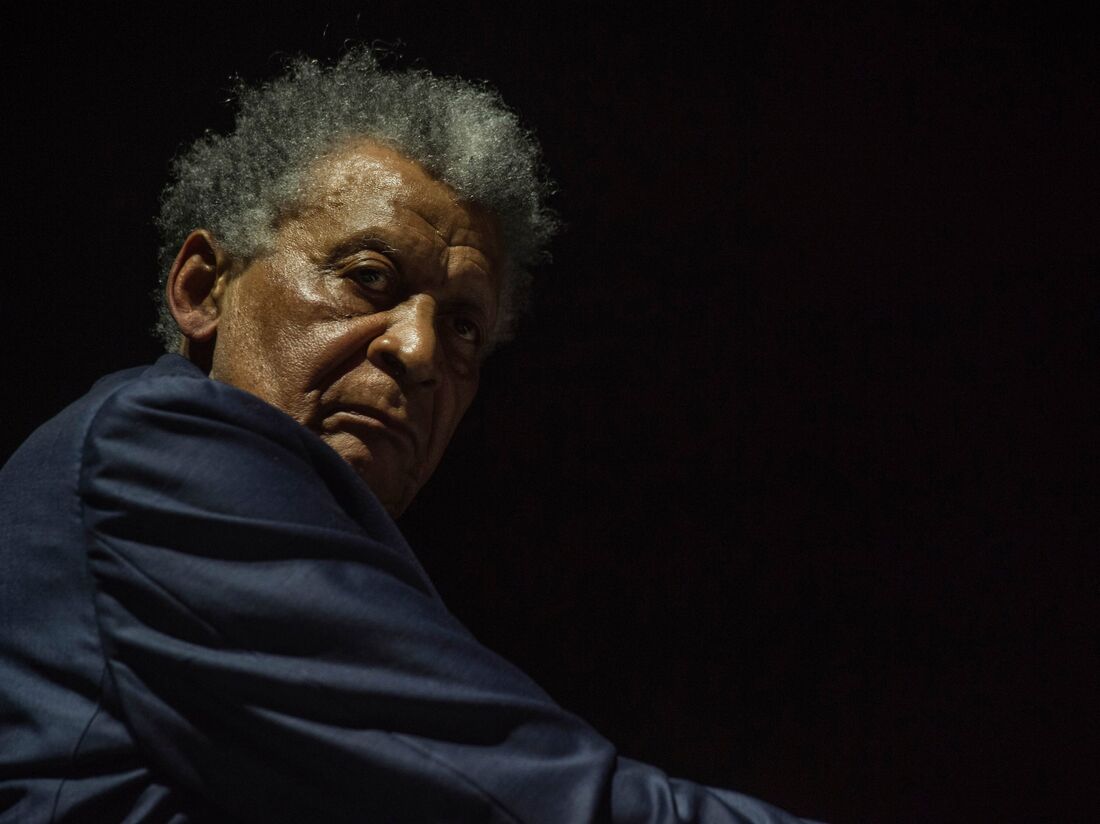
Abdullah Ibrahim, South Africa’s revered jazz pianist, passed away at 91 after a brief illness. He died in Germany, his adopted home, leaving South Africa close to his heart. Marina Umari, his partner, shared Ibrahim’s unwavering love for his homeland.
Early Life and Career
Ibrahim was born Adolph Johannes Brand in 1934. His early exposure to music came from his mother, a church pianist, which led him to start piano lessons at age seven. He became known as Dollar Brand by 15, launching his professional journey.
In the late 1950s, Ibrahim formed the Jazz Epistles with Hugh Masekela. Their album, Jazz Epistle Verse One, was the first by an all-Black South African jazz ensemble. Despite no direct political content, the group faced government harassment post-Sharpeville massacre.
Resettlement and Duke Ellington
Ibrahim relocated to Europe, where he met Duke Ellington in 1963 through vocalist Sathima Bea Benjamin. Ellington’s production of Duke Ellington Presents the Dollar Brand Trio boosted Ibrahim’s popularity, aiding his European tours.
Vijay Iyer appreciated Ibrahim’s ability to create intimate concert experiences through reflective music. Ibrahim’s unique style merged his heritage with jazz traditions, offering a surreal composure that captivated listeners.
Influence and Innovation
South African pianist Nduduzo Makhathini admired Ibrahim’s sound, connecting traditional roots with global influences. In 1965, Ibrahim married Benjamin and moved to the U.S., playing at Newport Jazz Festival the same year.
He led the Duke Ellington Orchestra on five U.S. tours in 1966. A Rockefeller Foundation grant in 1967 led him to study at Juilliard, expanding his jazz connections with figures like Max Roach and Ornette Coleman.
After converting to Islam in 1968, Ibrahim embraced a synthesis of jazz and South African elements. He created “Mannenberg,” a song influential in Mandela’s imprisonment. Its impact earned Ibrahim the title of South Africa’s Mozart.
Public Engagement and Recognition
Through the ’80s, Ibrahim’s international presence in jazz grew. His band, Ekaya, performed widely. Pianist Kenny Barron praised Ibrahim’s lyrical performances, writing “Song for Abdullah” inspired by his music.
Makhathini was influenced by Ibrahim to prioritize one’s defining musical elements. Vijay Iyer reflected on Ibrahim’s early works and their novel, personal conception.
Legacy in Film and Awards
Ibrahim composed music for films like Chocolat (1988) and No Fear No Die (1990) and was featured in documentaries A Brother with Perfect Timing (1987) and A Struggle for Love (2005).
His continuous creativity led to a NEA Jazz Masters Fellowship in 2018, recognizing his impact on the jazz genre. In 2019, Ibrahim shared Duke Ellington’s advice—presenting old and new pieces with fresh perspectives—for a lasting career.
He conveyed the joy of accomplishment mixed with the inevitable journey of growth, reflecting his enduring calm approach to life and music.