
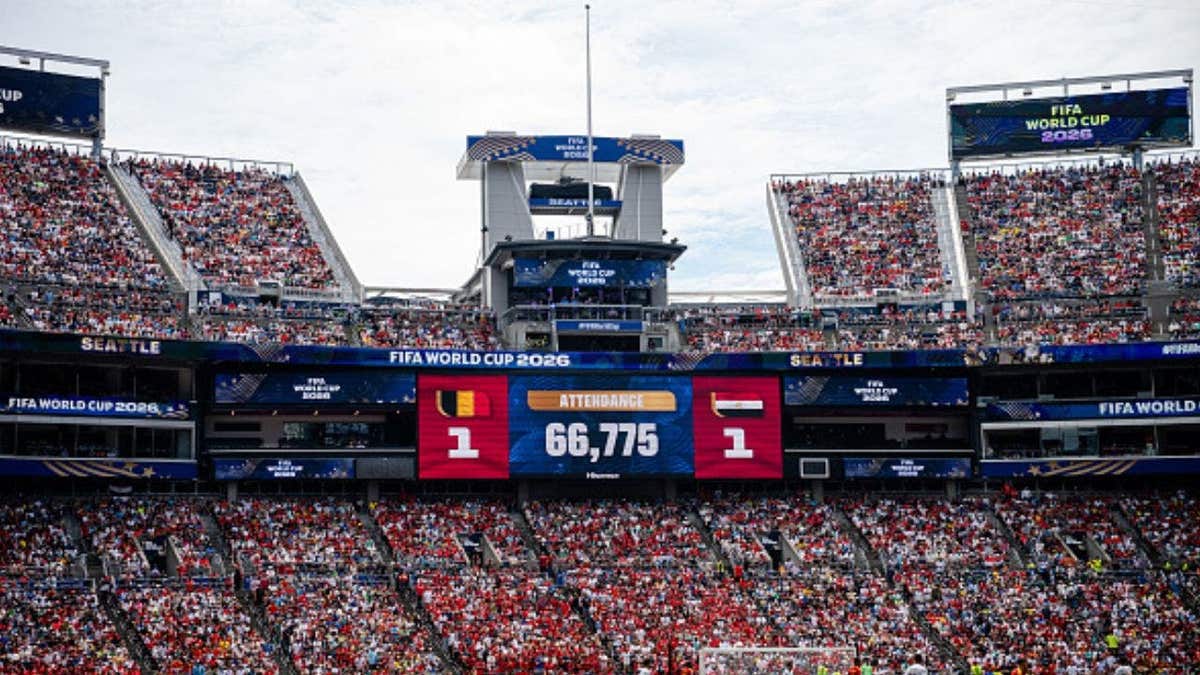
The recent World Cup debut in Seattle at Lumen Field attracted 66,775 fans for an intense 1-1 draw between Belgium and Egypt. While the match captured attention inside the stadium, Seattle faced scrutiny outside for controversial protest zones set up by the police.
The Seattle Police Department designated small protest zones around the venue using plastic cones and orange netting. These areas, located along Occidental Avenue and South King Street, appeared too cramped, resembling dog parks rather than spaces for public demonstrations.
The areas were unexpectedly tiny, barely accommodating a few people standing together.
Few demonstrators adhered to these zones, choosing instead to move freely around the streets, rendering the zones largely useless. Fans treated the empty zones humorously, turning them into a punchline. Belgium supporters even posed for photos next to the zones, likening them to Seattle landmarks. Online, videos and posts questioned the practicality of such confined spaces for protests.
A social media user summed up the sentiment, questioning the idea of restricting free speech to specific areas.
Local authorities have been working to improve Seattle’s image in preparation for future World Cup events. This effort includes clearing out nearby homeless encampments and positioning the city as a premier event host.
Despite these initiatives, the protest zones remained a focal point of discussion. The impracticality of these small, boxed-off areas left many wondering about their purpose in a city known for its active public demonstrations.