
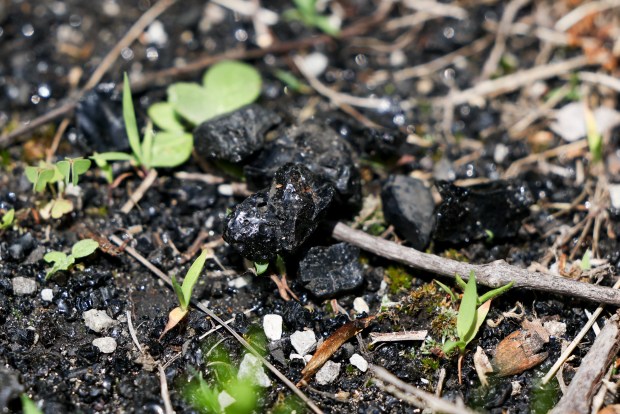
TOWN OF PINES, Ind. — Cathi Murray’s herb garden on Colorado Avenue conceals dark reminders of nearby pollution. As she digs, she unearths two gleaming black rocks, not just ordinary stones but coal ash, remnants of coal burned at the Michigan City Generating Station, roughly 3 miles from her home near Lake Michigan.
These coal ash pieces, mixed with dust around her yard and nearby paths where her daughters played, remind locals of the pollution impacting their lives for decades. “It’s everywhere,” Murray emphasized. Since the 1970s, Northern Indiana Public Service Co. (NIPSCO), the plant’s owner, supplied the community with excess coal ash as fill material for roads and landscaping, a move backed by the Environmental Protection Agency (EPA).
Exposure to coal ash is linked to health issues like cancer and neurological disorders, according to the National Institute of Health.
In the late 1990s, the power plant deposited over 1 million tons of coal ash without proper lining in Pines, contaminating the local groundwater supply. Over 20 years after becoming a Superfund site, Pines still grapples with this lingering pollution. “Once you make a mess, it takes so long to right the wrong,” stated Lisa Evans, senior counsel at Earthjustice, a nonprofit focusing on environmental law. They have contested federal coal ash rules over time.
Environmentalists are concerned as the EPA considers rolling back parts of its 2024 coal ash regulations. Earthjustice reported 88 sites within a 2-mile radius of the Great Lakes are used for coal ash disposal, raising alarms about weakened regulations.
Proposed Changes and Concerns
The EPA suggests delaying closures and loosening restrictions on coal ash reuse, echoing practices that led to Pines’ pollution. The agency proposes exempting “legacy” sites, spots cease operations before 2015, which the Biden EPA previously closed, further threatening areas like the Great Lakes.
“It’s incredibly sweeping in the destruction of safeguards,” Evans noted. A seawall in Michigan City, built 77 years ago, is the primary defense against potential coal ash spillage into the lake. Ashley Williams, of Just Transition Northwest Indiana, expressed worry about wave surges breaching this barrier.
The Indiana Department of Environmental Management expressed more concern about groundwater seepage over surface spillage. A state law blocks Indiana from enforcing stricter coal ash standards than federal dictates, limiting state intervention if federal rules weaken.
Regulatory Differences and Impacts
In Illinois, several unlined coal ash ponds near Lake Michigan at the closed Waukegan Generating Station are under stricter controls than in Indiana. The Illinois Pollution Control Board noted site leaks for over 16 years. However, the state law does not cover legacy sites, exposing potential future risks.
Debra Shore, former EPA regional administrator, highlighted the regulatory inconsistency among states around the Great Lakes, stressing the national scope of the problem. Shore commented that the 2024 rules had started cleanup initiatives but feared the direction could reverse with new guidelines.
Challenges in Monitoring and Cleanup
The costs of historical pollution remain tangible. Cathi Murray recalls moving to Pines before realizing the extent of contamination below her family’s feet. Residents launched investigations, leading the EPA to identify the town as a Superfund site in 2004, committing NIPSCO to cleanup.
A 2022 settlement required NIPSCO to invest $11.8 million in ongoing groundwater restoration, yet environmentalists warn against the implications of rolling back coal ash guidelines. They see Pines as illustrative of long-term repercussions tied to lax regulation.
As the EPA considers changes, the agency describes them as efforts to balance regulatory relief with health protection. But critics, including Debra Shore and Evans, argue the plans endanger public health by downplaying red flags already evident in places like Pines.
NIPSCO plans to end coal operations at the Michigan City plant by 2028. However, advocates remain wary, particularly with extensions affecting other state plants. Williams expressed concern regarding the continued use of coal as demand for electricity grows.
Community Involvement and Ongoing Efforts
Local advocate Mayra Mendez, upon discovering her hometown’s toxic legacy, formed Clean Power Lake County, urging for closures of sites like Waukegan Generating Station. Federal changes could escape full oversight of current legacy sites.
Civic and environmental groups prepare for potential regulatory easing, fearing impacts on drinking water safety and future cleanups. “There’s no reason to give them more time,” Shore emphasized, promoting individual assessments over broad regulation adjustments.
The potential rollback might spare various states from huge cleanup tasks.
As the EPA’s proposal nears a final decision, advocates like Williams continue pressing for accountability and regulation to prevent future coal ash pollution effects on health and the environment.