
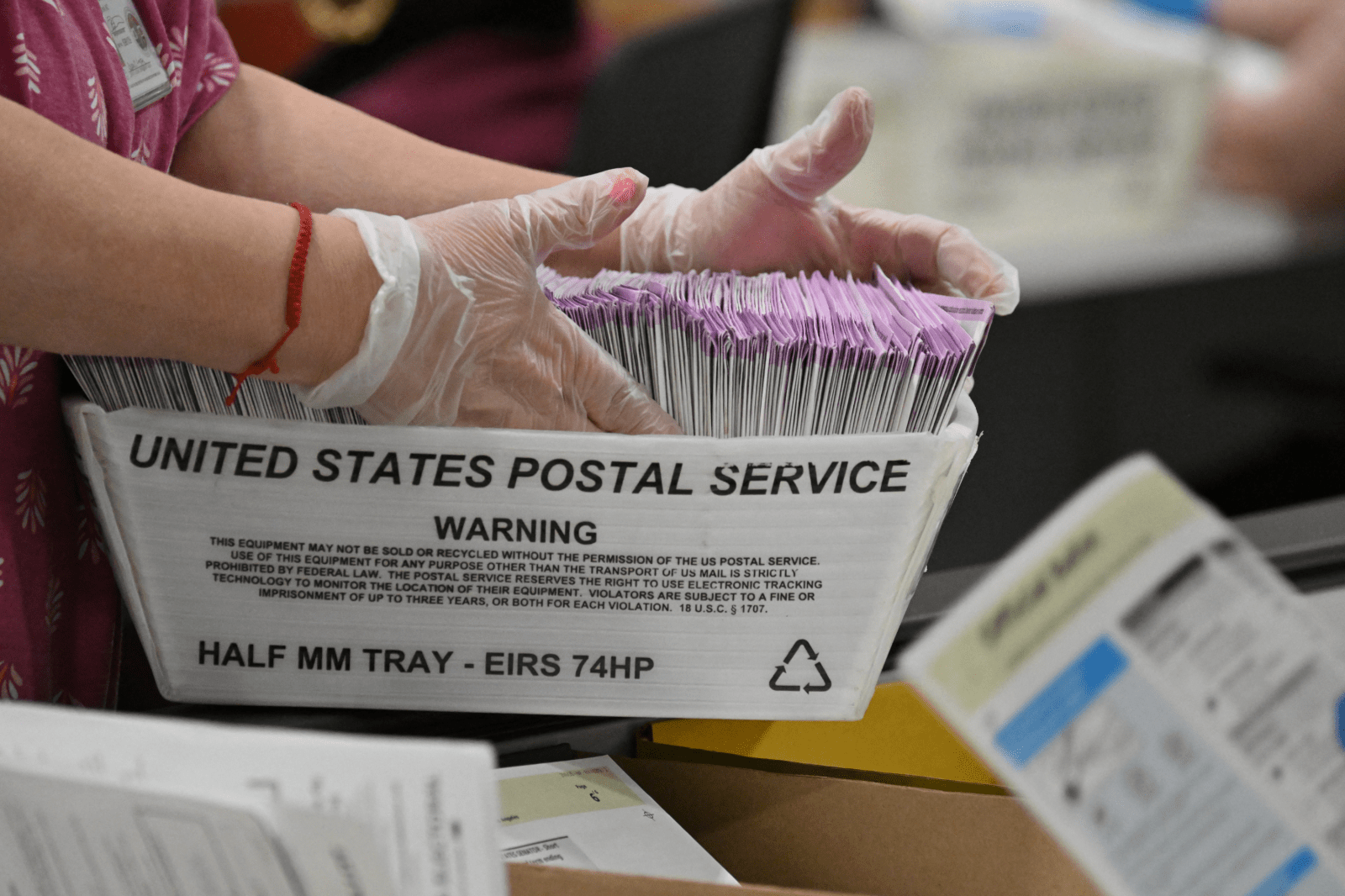
A small group of states that conduct their elections primarily by mail currently find themselves at the epicenter of a crucial conflict influencing whether many ballots will reach voters soon. This dispute is centered around proposed regulations from the U.S. Postal Service (USPS), in response to President Donald Trump’s March 31, 2026 executive order concerning election administration.
Proposed USPS Rules
The proposed rules necessitate states to submit detailed lists of mail voters, potentially halting ballot delivery for non-compliance. This has immediate implications as over 48 million Americans used mail-in voting in the 2024 elections, representing about one-third of voters nationwide. As the 2026 midterms draw near, election officials express concern that these changes may disrupt voting operations, particularly in states where mail is the main voting method, not a supplementary option.
A total of 23 Democratic-led states, along with Washington, D.C., have already initiated lawsuits, with a federal appeals court expected to make a ruling this summer as preparations for the November midterms begin. News outlets reached out to USPS and the White House for comments on the matter.
Executive Order Details
This executive order, titled “Ensuring Citizenship Verification and Integrity in Federal Elections,” is part of Trump’s ongoing efforts to assert federal election control, despite lacking evidence for his frequent claims of election fraud. Key provisions include:
- Homeland Security compiling state-by-state lists of voting-age U.S. citizens.
- The Postal Service enforcing rules to ensure ballots only reach approved list voters.
- Tracking systems with unique barcodes for mail ballots.
The directive raises a constitutional question since election administration is primarily a state responsibility. The USPS proposal released in late May aims to enforce these directives.
Changing USPS Role
The USPS proposal represents a major shift from its traditional role as a neutral mail carrier to becoming a voting process gatekeeper. Historically, USPS delivered election mail based on postage and routing criteria, without engaging in voter eligibility checks.
The proposed changes would compel states to provide detailed voter information, including names, addresses, and ballot-specific barcodes, allowing USPS to reject or return mail that fails to meet standards.
“The Constitution makes clear: the states and Congress—not the president—set the rules for our elections,” declared the ACLU in a lawsuit against the measures, suggesting the order risks transforming the Postal Service into “an arbiter of who may cast a ballot by mail.”
Impact on High-Mail States
These proposed changes could significantly affect states where mail voting is the core system, notably California, Oregon, Washington, and Colorado. In these states, the postal network functions as essential infrastructure, similar to polling places elsewhere.
Presently, eight states and Washington, D.C., primarily use mail voting systems, with all states offering some form of mail voting. Any disruption in high-mail states could severely disrupt voter participation.
Oregon’s Secretary of State, Tobias Read, emphasized the potential impact: “This would deny eligible people the right to vote. Full stop.” Similarly, Maine’s Secretary of State, Shenna Bellows, highlighted potential wider consequences if courts uphold the policy.
Concerns and Legal Challenges
Beyond states primarily using mail voting, others like Arizona, Nevada, and Michigan could also experience significant disruptions. These states have many mail voters, do not rely solely on mail voting, and frequently decide federal elections by slender margins.
Sizeable jurisdictions might already possess sophisticated ballot tracking systems aligned with the proposed rules, whereas smaller or rural areas could struggle to comply without costly redesigns. The timing of compliance is another crucial factor, as ballots are usually sent weeks ahead of an election.
The underlying conflict extends beyond postal operations to voter data collection. The executive order directs federal agencies to construct citizenship databases, tying ballot delivery to state-provided lists. Some state officials argue this is an indirect attempt to acquire voter data.
Courts are now at the center of this legal battleground. Under Article I of the Constitution, states dictate election aspects like times and procedures, with Congress retaining oversight. Attempts to impose national election rules via executive action challenge this established principle.
Appeals are underway, and a definitive decision by the D.C. Circuit could profoundly influence the federal government’s election involvement, particularly given the USPS condition of linking ballot delivery to federal compliance.
Future Prospects
The practical feasibility of enforcing these rules remains uncertain despite potential judicial approval. The proposal’s success relies on developing a new digital platform for voter list management and ballot tracking, a technology yet to exist. Logistical challenges also exist within USPS, which already processes millions of election mailpieces efficiently by focusing on speed and scale.
As legal proceedings progress, key developments, such as the USPS’s launch of a voter list portal and the Homeland Security’s issuance of citizenship lists, will signal the conflict’s trajectory. Compliance by states with federal data requirements will also be a critical factor.
The implications extend beyond this election cycle, potentially influencing U.S. election structures for years. Mail voting now serves millions of American voters across diverse demographics and political parties. Should the Postal Service assume control over ballot delivery, the fundamental mechanics of the voting process itself could change mere months before the next elections.