
A federal lawsuit was filed on Thursday to challenge a new Illinois law that is scheduled to begin in September. This law would allow doctors to prescribe medication to terminally ill patients that could help them end their own lives. The suit was filed by two disabled patients, a doctor, and several disability and patients’ rights organizations.
The plaintiffs argue that the state’s End-of-Life Options for Terminally Ill Patients Act disrupts traditional patient protections, stating it ends the ethical obligation to do no harm between doctors and patients. The suit names Democratic Governor J.B. Pritzker, the Illinois Department of Public Health, and its director, Dr. Sameer Vohra, as defendants.
The lawsuit alleges that this law violates federal laws such as the Americans with Disabilities Act and the Affordable Care Act because it discriminates against people with disabilities. The plaintiffs also claim that their equal protection rights under the 14th Amendment are being violated.
A separate lawsuit was filed in New York for similar reasons, targeting Democratic Governor Kathy Hochul and New York’s medical-aid-in-dying law set to take effect in August.
The Illinois lawsuit also states that the End-of-Life Options Act changes the legal foundation of doctor-patient relationships by removing the traditional legal expectation of care providers to do no harm. It replaces this with a standard allowing doctors to prescribe drugs that would enable patients to die by suicide.
EOLA embarks on this reckless experiment with no guardrails and no adequate legal framework to prevent the erroneous taking of life.
According to the lawsuit, without safeguards, there is a risk that the right to die could evolve into a duty to die for individuals with expensive disabilities or inadequate resources for medical care.
The lawsuit additionally claims that people with life-threatening disabilities might be pressured by insurers, hospitals, and doctors to end their lives prematurely.
The Illinois Department of Public Health chose not to comment due to the ongoing litigation, while Governor Pritzker’s office did not respond to requests for comment.
Governor Pritzker signed the law last year after extensive debate. It permits terminally ill patients, judged to have six months or less to live, to use life-ending medication. Illinois became part of a group of over 10 states, along with Washington, D.C., that allow medical aid in dying.
In contrast, opponents argue that enabling someone to end their life is immoral. Pope Leo XIV expressed his disappointment after the Governor signed the measure into law, following discussions about the bill with Pritzker.
Under the new law, patients eligible for medication must be at least 18 years old, Illinois residents, and their intention must be documented through multiple requests: an initial oral request, a written request, and a second oral request five days later. Two witnesses are required to verify that the patient is acting voluntarily and is mentally sound.
When the second oral request is made, the attending physician must offer the possibility to rescind the request and must provide information about end-of-life care options, including comfort, hospice, palliative, and pain control care.
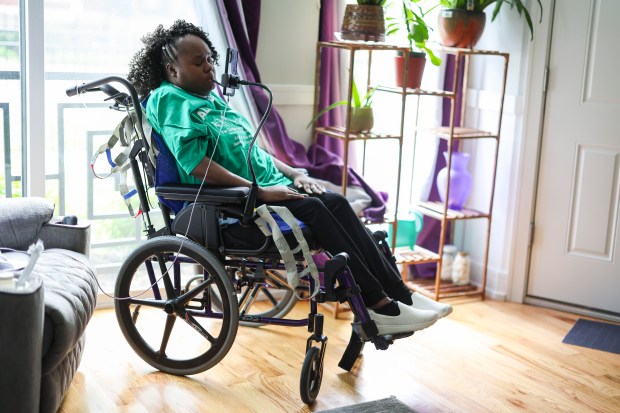
The United Spinal Association, the National Council on Independent Living, and the Progress Center for Independent Living are participating organizations in the lawsuit. Plaintiffs include Ebony Payne, a quadriplegic who has frequently been in life-threatening situations, and Pam Heavens, born with cerebral palsy, who needs a motorized wheelchair and is concerned about possible lapses in her medical support.
Dr. Nooshig Luz Salvador, who treats patients with disabilities and terminal illnesses, is also a plaintiff. The lawsuit mentions her concerns that patients are often in shock after receiving a terminal diagnosis and may not receive adequate communication about their end-of-life options.