
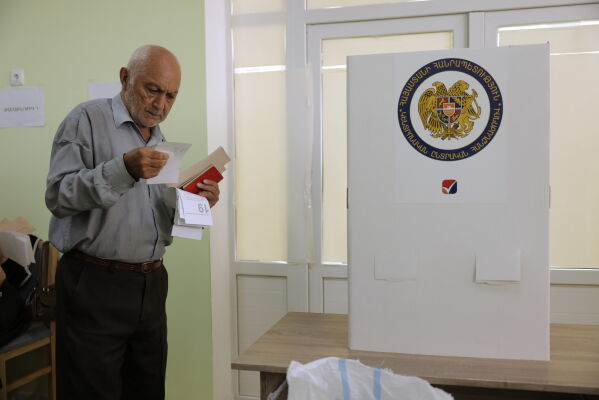
Armenian Prime Minister Nikol Pashinyan declared victory in the recent general election, a pivotal event reflecting Russia’s influence in Armenia. Preliminary results revealed his party secured twice the votes of its nearest rival.
Pashinyan sought a mandate to shift Armenia’s geopolitical stance, reducing ties with Moscow and strengthening Western relationships. “The European Union is our main partner in democratic reform implementation, and we will continue that path,” he stated after voting.
European election observers described the election as divisive yet efficient, noting Russian interference attempts and claiming the government stifled its pro-Russian opposition. Pashinyan’s party, Civil Contract, received 49.82% of the vote. Opposition leader Samvel Karapetyan, under house arrest accused of plotting to overthrow the government, argued the charges were politically motivated. His alliance, Strong Armenia, garnered 23.28%.
Richard Giragosian, director of the Regional Studies Center in Yerevan, labeled the election “genuinely free and fair.” He noted that Russian efforts to meddle were unsuccessful.
Tense Russian-Armenian relations have emerged lately, with Russia issuing economic threats over Armenia’s EU alignment. Armenia relies on Russian infrastructure, underscored by President Vladimir Putin’s meetings with Pashinyan. Russia imposed bans on Armenian imports such as flowers and fish, alleging rule violations. The EU termed these actions economic coercion.
Armenia’s National Assembly mandates at least 101 members, elected every five years. Partisan thresholds require 4% of votes for entry, and 8% for multi-party blocs. The Hayastan bloc, led by former President Robert Kocharyan, received 9.93%. Gagik Tsarukyan’s Prosperous Armenia Party neared 4%. Turnout was reported at 58.94%.
Preliminary counts suggest Pashinyan’s party will secure 61 seats, allowing it to legislate independently but not amend the constitution without public approval.
Opposition parties object to Pashinyan’s efforts in easing tensions with Azerbaijan. In August, an agreement was initiated with Azerbaijani President Ilham Aliyev under U.S. President Donald Trump’s witness. The leaders aim for a peace deal concerning Karabakh, previously an Armenian-controlled region now under Azerbaijani governance. Pashinyan aims to formalize this deal, proposing a transit corridor named after Trump.
International monitors from the Organization for Security and Cooperation in Europe confirmed the election’s legitimacy in a joint statement, despite external pressures noted.
Responses varied as the EU, preparing financial aid for Armenia, praised the election. European Commission President Ursula von der Leyen emphasized EU-Armenian relations. Meanwhile, Russia’s Foreign Ministry criticized the elections, pointing to Western interference, yet showed willingness to work with Armenia’s government.