
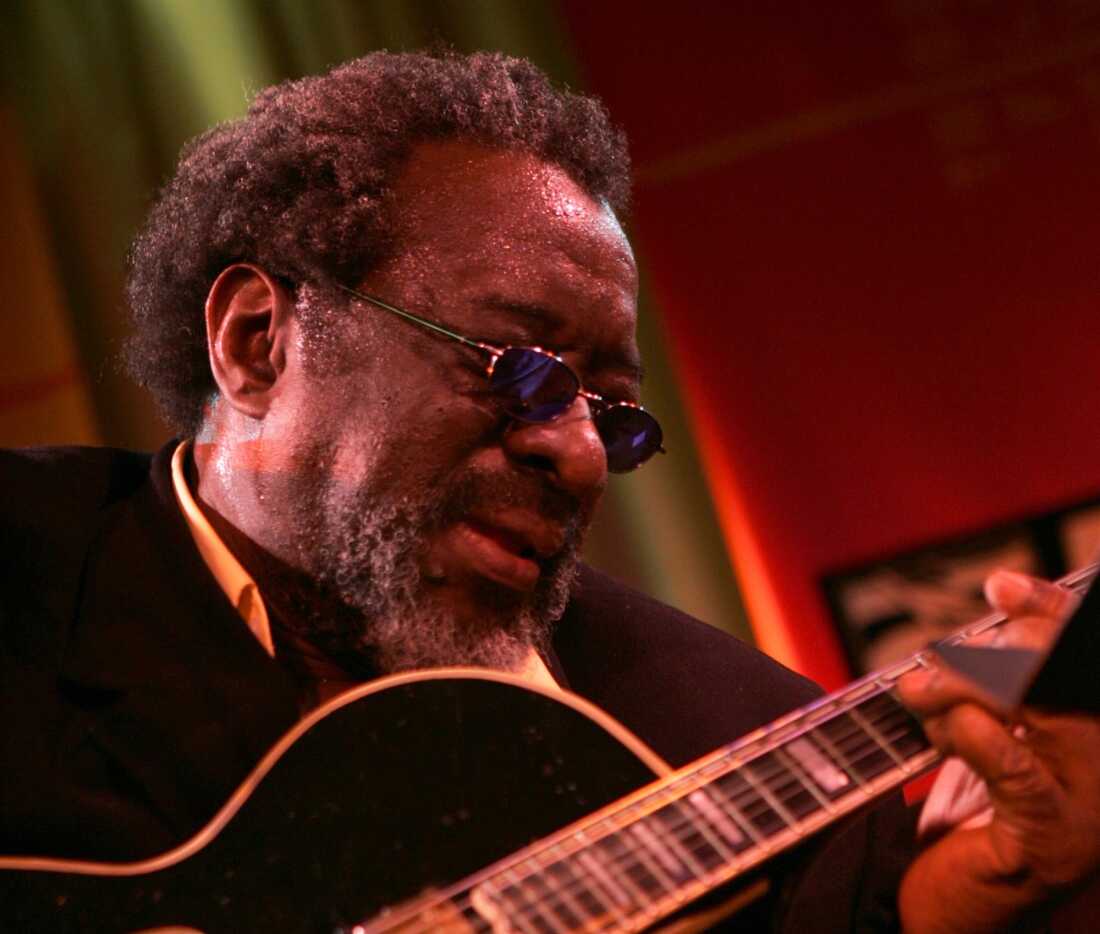
James Blood Ulmer, renowned for his electrifying guitar work and captivating vocals, passed away on June 3 at the Upper Eastside Rehabilitation and Nursing Center in New York City. He was 86. His family confirmed Ulmer’s death, highlighting both his fearless music and spirit.
Ulmer’s music, deeply anchored in blues, often took unexpected turns, creating a sound both hallucinatory and intense. These qualities contributed to his collaboration with free-jazz pioneer Ornette Coleman in the early 1970s. Ulmer embraced Coleman’s Harmolodics concept, which allowed freedom from key restrictions. This approach resonated with Ulmer, prompting him to tune each guitar string to the same note. His style meshed drones with dissonance and composure with spontaneity, supported by musicians like saxophonist David Murray and drummers Ronald Shannon Jackson and G. Calvin Weston.
Critic Robert Palmer of the New York Times described Ulmer’s music as “the freshest and most visceral” after witnessing a 1979 performance. By 1981, Palmer recognized him as “the most original electric guitarist” since Jimi Hendrix. Ulmer’s style bore a sense of daring, much like Hendrix’s, but with an even bolder grasp of tonality.
His performances could seamlessly transition from syncopated funk to fevered dream states.
Born Willie James Ulmer in St. Matthews, South Carolina, on February 8, 1940, he was the oldest of eight children. His father, James David Ulmer, a Baptist preacher, gifted him his first guitar at age four. Ulmer performed with his father in the Southern Sons Quartette but eventually left the ministry for rock ‘n’ roll and blues. After high school, he played guitar for R&B groups in Pittsburgh, including the Savoys and the Del Vikings. His music journey took him through Columbus, Ohio, and Detroit before settling in New York in 1971.
In New York, Ulmer regularly played at Minton’s Playhouse in Harlem, connecting with avant-garde artists like drummer Rashied Ali and saxophonist Arthur Blythe. Through Blythe, Ulmer entered a major label, contributing to Columbia albums such as ‘Lenox Avenue Breakdown’ and ‘Illusions’. He soon had his record deal, releasing ‘Free Lancing’, ‘Black Rock’, and ‘Odyssey’ between 1981 and 1983. His band ‘Odyssey’ featured Charles Burnham on violin and Walter Benbow on drums, with standout tracks like “Are You Glad to Be in America?”
During the 1980s, Ulmer’s acclaim in music media led to some criticism. Greg Tate, writing for The Village Voice, recognized Ulmer’s music as “shrill, disjointed fragments,” tied together by his thematic approach, with an “admiring assessment”, drawing comparisons to Andrew Hill and Mississippi Fred McDowell.
Tate’s insights later opened his collection ‘Flyboy in the Buttermilk: Essays on Contemporary America’.
Ulmer’s career extended beyond his time with Columbia, resulting in over two dozen albums. Notable works included ‘Harmolodic Guitar with Strings’ in 1993, and blues records produced by Vernon Reid, such as ‘Memphis Blood: The Sun Sessions’ (2001) and ‘No Escape from the Blues: The Electric Lady Sessions’ (2003).
Ulmer’s final concert took place at the 2024 Detroit Jazz Festival. His health declined, leading to his retirement shortly after. In 2023, during a solo concert at Solar Myth in Philadelphia, Ulmer delivered a performance marked by mystique and emotion, encapsulating his vast musical journey.