
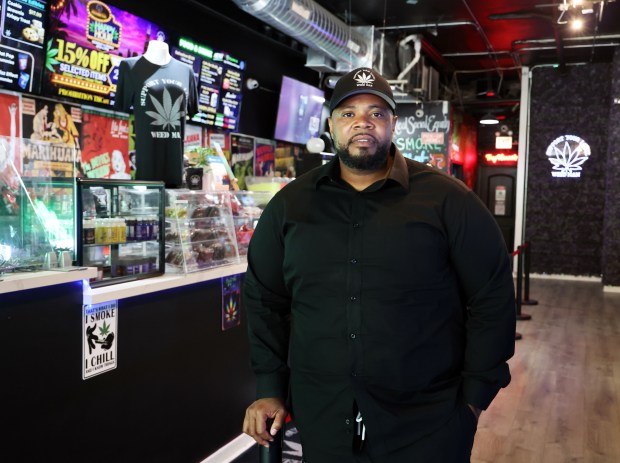
After the 2018 federal legalization of hemp, Samuel Wilson co-founded Prohibition THCafe. This establishment sells hemp-derived THC edibles and beverages on the Near South Side. In a recent celebration of the informal cannabis holiday on April 20, the cafe collaborated with Harold’s Chicken to offer infused wings. This event attracted sizable customer lines. Now, however, both federal and state legislation could force Wilson out of business.
New Legislation
A new federal law aims to ban sales of intoxicating hemp. Additionally, an Illinois bill, already approved by lawmakers, could restrict hemp sales exclusively to state-licensed dispensaries. Governor JB Pritzker’s signature is necessary for this to take effect. Targeting the elimination of disreputable shops selling untested hemp to minors, this bill would also impact businesses like Wilson’s, which claims to offer only tested products for adults aged 21 and over.
Implications for Businesses
Wilson perceives this legislation as detrimental to small business operators, potentially handing over control to larger corporate entities. Licensed cannabis companies support these regulations. They argue hemp shops undermine their sales without adhering to the same security measures, such as product testing and labeling.
Cannabis operators have advocated for these changes as an essential adjustment to the industry. Should the Illinois ban on intoxicating hemp take effect in November, it will precede a similar federal measure that limits hemp sales to less than 0.4 milligrams of total tetrahydrocannabinols.
Market Impact and Changes
Hemp startups have carved a notable niche in Illinois, comprising over 1,000 retailers and generating approximately $870 million in 2025 sales, based on a Whitney Economics survey. However, the proposed legislation would see an end to unlicensed hemp sales regardless of federal law adjustments.
The wider “omnibus” Illinois bill aims to redefine cannabis possession limits. Residents could possess 60 grams of flower, and 1,000 milligrams in edibles. Non-residents would hold half those amounts. Dispensaries could extend operating hours to 2 a.m., barring local restrictions, simplifying access for customers.
Medical Cannabis and Tax Considerations
This legislation holds potential benefits for medical cannabis users by broadening sales of tax-exempt medical products. Prior restrictions limited where these products could be purchased. The ability to sell medical cannabis presents advantages to new startups, offering potential tax deductions under recent federal rescheduling efforts.
Novel elements in the bill include drive-thru services, and the legal transport of cannabis, provided it remains in original packaging.
Industry and Legislative Responses
Tiffany Ingram, executive director of the Cannabis Business Association of Illinois, endorses the bill. She highlights its dual approach of updating outdated regulations and tackling the rise of intoxicating hemp sales. New licensing opportunities for hemp sellers align with industry restructuring goals.
State Rep. Will Guzzardi shares that, if enacted, the bill will immediately ban intoxicating hemp sales to minors and prohibit misleading marketing targeting them. It also removes a costly dispensary requirement for external security contracts, suggesting in-house solutions instead.
Given potential shortfalls in federal enforcement resources, state regulators and local authorities may wield primary responsibility for these legislative changes.