
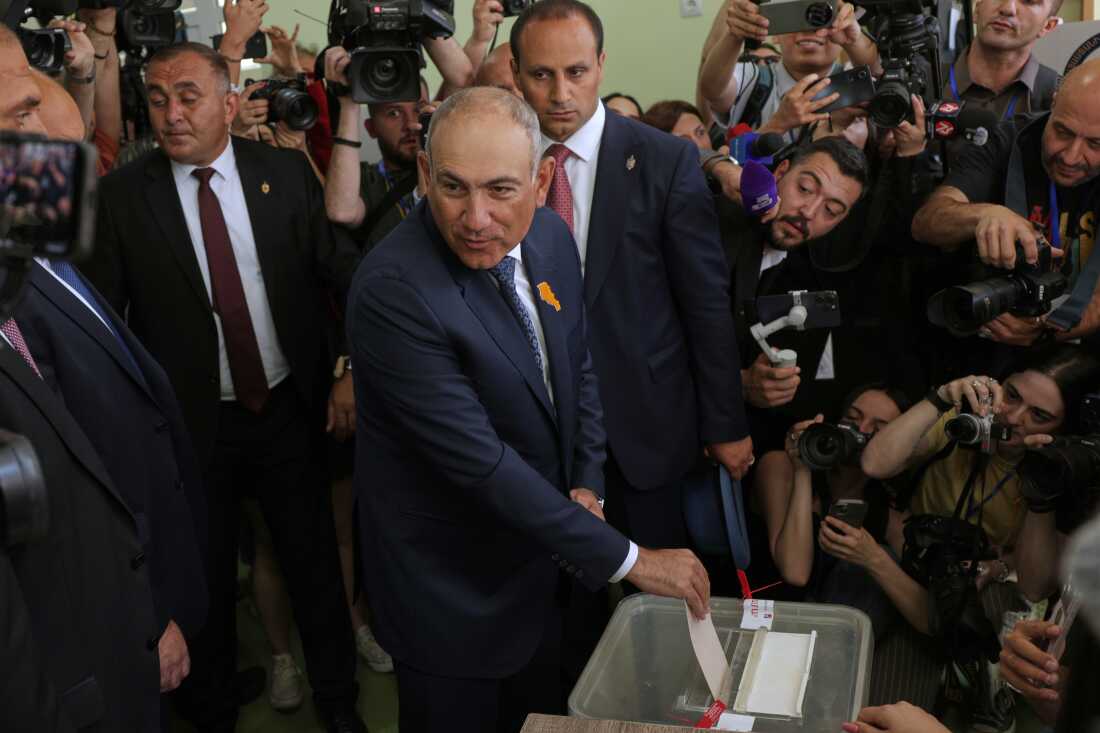
Armenian Prime Minister Nikol Pashinyan cast his vote in the country’s parliamentary election on June 7, 2026. The election gained attention due to Armenia’s geopolitical shifts under Pashinyan’s leadership. His government aims to reduce dependency on Russia and enhance ties with Western nations.
Pashinyan, leading the Civil Contract party, sought a robust mandate to support Armenia’s new geopolitical direction. He faced opposition from parties favoring strong relations with Russia. Pashinyan emphasized Armenia’s commitment to independence, democracy, and the rule of law, while denying any tensions with Russia.
Armenian exporters faced recent restrictions from Russian officials, sparking concerns. President Vladimir Putin has made comparisons to Ukraine, which was invaded by Russia after altering its geopolitical stance. Additionally, Armenian authorities issued arrest warrants against members of the opposition Strong Armenia party, accusing them of buying votes. Strong Armenia’s leader, Samvel Karapetyan, dismissed these charges as politically motivated.
The Armenian National Assembly requires at least 101 members elected for five-year terms. Political parties must secure at least 4% of the vote to obtain seats, with higher thresholds for blocs. The election involved two blocs and 17 parties, with predictions favoring Pashinyan’s victory.
“I think Armenians expect, first of all, a peaceful, independent and prosperous Armenia from this election, as we have today,” said Hripsime Grigoryan, a Civil Contract member.
While Pashinyan has attempted a balanced foreign policy, favoring relations with the US and Europe, he garnered more support in the West than Moscow. His stance attracted endorsements from leaders such as U.S. President Donald Trump, while displeasing the Kremlin.
Opposition parties largely advocate closer ties with Russia. The Strong Armenia party, along with others like Hayastan and Prosperous Armenia, criticize Pashinyan’s attempts to normalize relations with Azerbaijan, especially regarding the conflict over the Karabakh region.
Russian restrictions on Armenian products ahead of the election were labeled as economic coercion by the European Union. Moscow controls significant parts of Armenia’s energy and infrastructure, often tying economic leverage with political influence. Putin made clear that Armenia cannot simultaneously belong to both the European Union and the Eurasian Economic Union.