
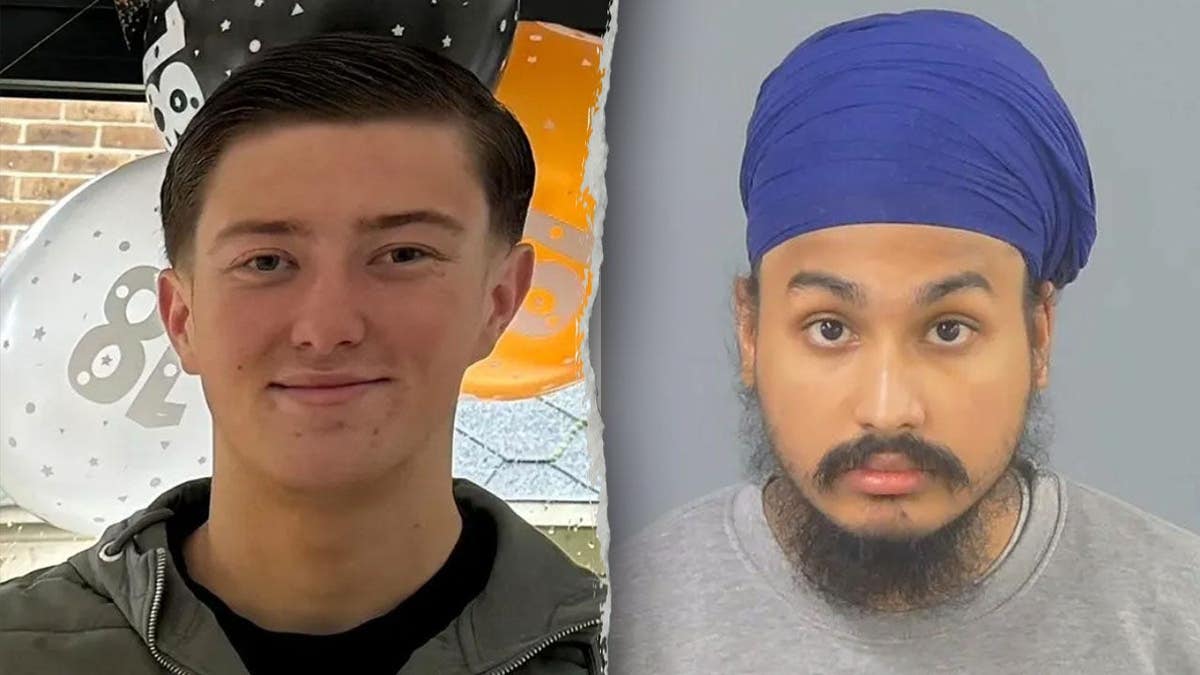
Fox News senior foreign affairs correspondent Greg Palkot has reported on the public reaction to the fatal stabbing of Henry Nowak in the United Kingdom. This case has led to protests and widespread public concern.
Henry Nowak, an 18-year-old college student, was tragically stabbed in December in Southampton, England. The attacker, Vikram Digwa, used an eight-inch ceremonial knife. Authorities found Digwa guilty of murder in late May. Despite the gravity of the incident, American media largely ignored the story, and British media and politicians provided limited coverage.
Many draw parallels between this case and previous high-profile incidents such as the shooting of Trayvon Martin in 2012. Martin’s death sparked national discourse and was addressed by President Barack Obama, who empathized with the victim publicly. Although Nowak and Martin were both victims of violence, their circumstances differ significantly, including the race of the involved parties and incident locations.
The British police’s handling of Nowak’s case has been subject to scrutiny, with accusations of bias influencing their actions. Britain’s demographic shift and resultant cultural changes have affected public perception and the nation’s approach to racial and gender sensitivities. The quick demographic transformation saw populations previously 90% ‘White British’ drop to approximately 75%.
In modern Britain, free speech is carefully regulated. Reports highlight the arrest of 12,183 individuals for offensive online communications in 2023. At venues such as London’s Speakers Corner, expressing views labeled as transphobic or critical of Islam can be perilous.
Authorities now record ‘non-crime hate incidents’ based on victim perceptions without requiring proof, according to the College of Policing. This practice is part of efforts to achieve racial equity, contrasting with traditional concepts of treating all individuals equally without considering race.
Some Parliament members, like Chris Philp, have criticized the focus on accusations of racism at crime scenes over prioritizing emergency assistance. The incident reminds many of another case where preemptive actions in mental health settings, to avoid racial disparity, failed, leading to further violence.
Public dissatisfaction with the perceived double standards in handling cases involving diverse racial and political backgrounds is apparent. Activists argue that right-wing expression faces harsher consequences than leftist speech, illustrating alleged institutional biases.
This broader discussion surfaces amid allegations of favoritism toward immigrants by current Prime Minister Keir Starmer’s administration. Critics like Nigel Farage accuse Starmer of implementing a ‘two-tier’ justice system. Efforts to satisfy both immigrant groups and the native majority seem insufficient.
Without addressing these concerns and restoring equal justice, there is growing tension within British society, evidenced by public protests and political discourse.