
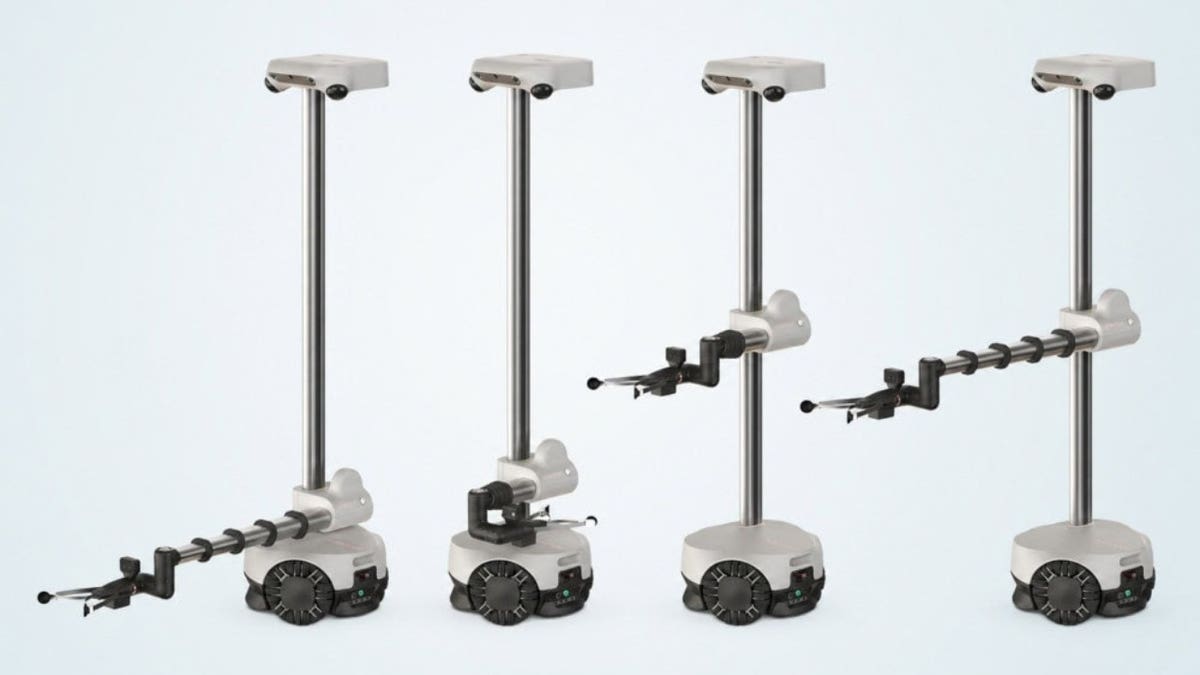
Recent developments in robotics have introduced a promising contender in the realm of home assistance with the introduction of Hello Robot’s Stretch 4. Unlike many emerging humanoid robots that strive to mimic human movements, Stretch 4 adopts a practical approach by rolling on wheels. This design may initially seem less thrilling, but within the complexities of a real household environment, wheels can offer distinct advantages.
Homes are filled with obstacles like rugs, cords, tight spaces, and furniture, where mobility is key. Stretch 4 navigates these challenges with a wheeled platform, equipped to safely and efficiently retrieve or manage objects at various heights using its extendable arm and lifting column. This robot focuses on delivering practical assistance both in homes and workplaces, aiming to meet real-life needs.
Stretch 4 employs wheels to traverse household environments, offering a sensible alternative to the complex mechanics of legged robots.
Stretch 4’s design strategy centers around safety and ease of movement. Its omnidirectional base enables seamless navigation, allowing movement in any direction without needing to turn first—ideal for maneuvering in compact spaces laden with household items. This capability stems from technological advancements borrowed from powered wheelchairs, aligning with its mission as an assistance robot in environments already accommodating to mobility challenges.
The robot embraces an enhanced sensor configuration, moving away from simpler camera-only setups. With lidar and wide-view cameras, coupled with a depth camera on its wrist, Stretch 4 capably observes its surroundings. These sensors help it avoid obstacles and handle tasks such as reaching and grabbing with increased precision and care. This approach enhances safety in dynamic home conditions where new challenges can emerge unpredictably.
While Stretch 4 boasts potential autonomous functionalities, human oversight remains integral to its operation. This engagement may involve direct control or supervising, facilitating a safe and practical adaptation to everyday use. Fully autonomous robots face challenges given the variability and clutter of personal living spaces, necessitating a balance between autonomy and human interaction.
Stretch 4 appears poised to make a significant impact, especially among users with severe mobility impairments. Simple tasks, from picking up items to repositioning objects, can greatly influence independence. The robot’s focus on these capabilities may prove instrumental in determining its utility in a domestic setting.
Wheels over legs: Simplifying robot mobility can enhance practical application in homes where complexity equals risk.
As for its market readiness, Stretch 4 currently targets primarily research and development sectors, with a price point of $29,950. While not yet aimed at average consumers, its deployment in research environments could refine its capabilities for broader use, ultimately supporting various care organizations and pilot initiatives eager to explore what this wheeled robot can achieve.
The arrival of Stretch 4 suggests that the first truly effective assistive home robot may deviate from humanoid appearances. Safety, practical assistance, and adaptability within existing living environments will guide its success. For individuals requiring daily help, functionality simplifies these decisions, emphasizing assistance over aesthetics.
For those keen on technology and its implications on everyday life, such advances indicate a potential shift—a move towards simple, effective solutions that elevate personal and household independence.
For more information and access to Kurt’s tech insights, visit CyberGuy.com, providing extensive resources and expert guidance to enhance everyday tech experiences.