
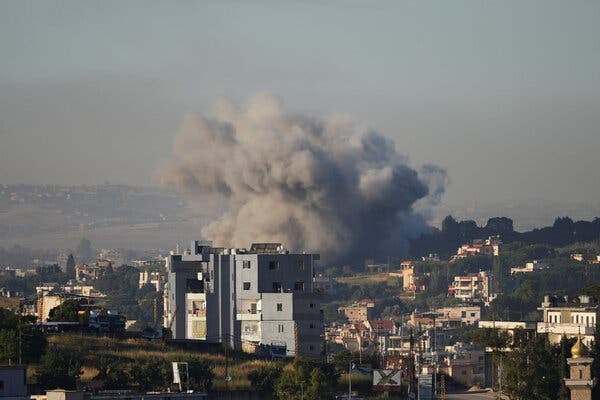
The conflict between Israel and Hezbollah persisted on Friday as the militant group, supported by Iran, rejected a cease-fire organized by the United States. Despite the agreement, Israeli forces continued their military actions across southern Lebanon, leading to widespread displacement and raising doubts about the cease-fire’s viability.
The recent agreement, announced following talks in Washington, stipulates that Hezbollah must retreat from Lebanon’s border region with Israel and halt all attacks. Israel, on the other hand, is not required to make immediate concessions, stating that military operations will continue until the conditions are met. This agreement has not involved Hezbollah in the negotiations, and Lebanon’s government holds limited influence over the group.
Evacuation orders were issued for towns, including Anqoun, approximately 16 miles from the Israeli border. This town, previously spared from such orders, sheltered about 2,500 displaced individuals. The series of evacuation orders is a result of Hezbollah’s leader, Naim Qassem, denouncing the cease-fire, labeling it an attempt at surrender and demanding comprehensive terms, including an Israeli withdrawal from occupied territories.
Israel’s defense minister, Israel Katz, expressed no plans to curtail the military campaign, emphasizing continued operations. Meanwhile, Lebanese civilians remain displaced, with over a million people already affected since the conflict reignited in March, offering no clarity on when, or if, they will return.
Hezbollah’s opposition to the agreement has introduced challenges for ongoing diplomacy. The situation threatens to disrupt U.S. President Trump’s efforts to engage Iran in peace talks, as Iran may withdraw if Israel persists with attacks on the Hezbollah group.
Jonathan Reiss contributed reporting to this story, with Euan Ward providing coverage from Beirut, Lebanon.