
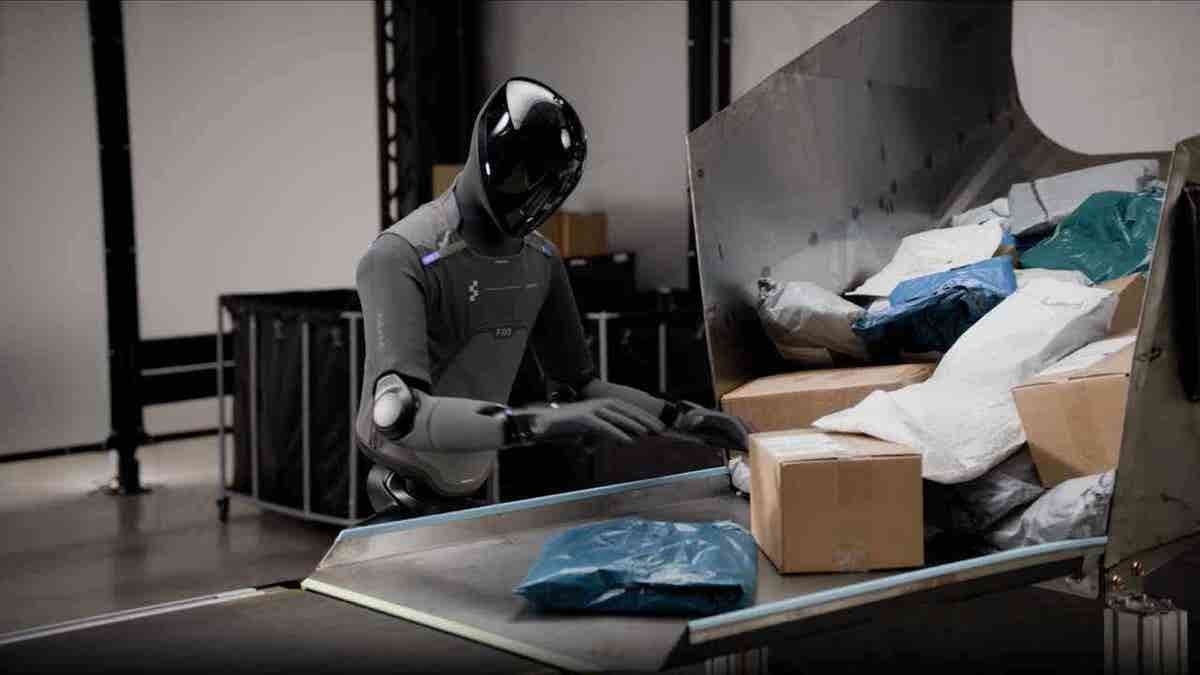
Humanoid robots are taking on roles behind the scenes at a significant retail operation. Figure AI has established a commercial agreement with Catalyst Brands, which owns JCPenney, Aéropostale, Brooks Brothers, Eddie Bauer, Lucky Brand, and Nautica. The initial deployment starts at Catalyst’s Reno, Nevada Distribution Logistics Center.
For now, these robots won’t be interacting directly with customers or handling retail tasks like stocking shelves or assisting in stores. They are tasked with warehouse and supply chain duties, focusing on repetitive and physically demanding tasks. This development has raised concerns among the public about potential impacts on human employment.
Robots in Catalyst Brands’ Warehouse Operations
Figure AI’s robots are intended to assist with Catalyst’s supply chain activities. The robots will concentrate on sorting and packing duties, initially integrating with Catalyst’s Joey Pouch sorting system, which facilitates computerized induction, sorting, and packing. Last year, Catalyst’s Reno site underwent a $40 million infrastructure update.
Catalyst Brands’ CEO, Marc Rosen, emphasized how emerging technologies can enhance operations and benefit the workforce. Automating routine tasks enables associates to focus on higher-value work and improves customer service. While robots will initially work in warehouses, some online reactions suggest a misunderstanding that they will soon appear in retail spaces.
Significance of the Figure AI Deal
The partnership between Figure AI and Catalyst Brands is notable because it involves a substantial retail network. Figure AI views this collaboration as an opportunity to deploy humanoid robots widely. Despite the anticipation, details like the number of robots or the specific tasks they’ll handle have not been disclosed.
This deal highlights a financial connection between Figure AI and Brookfield, an investor that also holds a stake in Catalyst Brands. Success at the Reno facility may lead to broader adoption of robots across Catalyst’s operations.
Concerns About Employment
The announcement omits important details such as the number of robots and specifics about human role changes. While the robots are meant to manage physically demanding tasks, uncertainties about their precise functions and impacts have sparked debate online. Some assume robots are quickly moving into retail stores, while others fear job displacement.
Workers are cautious, as they’ve seen AI lead to job cuts, slowed hiring, and team reorganizations. The introduction of physical robots in spaces for lifting, sorting, and packing adds a different layer of concern. The companies claim robots will take over mundane tasks, allowing employees to move to higher-value roles, but workers are concerned about retraining and replacement possibilities.
The Case for Warehouse Robots
Retail companies are keen on automation to handle warehouse work, which often involves repetitive physical strain. Finding efficiencies and reducing physical demands are key motivations. Figure AI’s pitch is that its humanoid robots can fit into spaces designed for humans without major structural changes.
Automation can potentially expedite product movement and reduce worker strain, especially during peak seasons when distribution centers face increased demand.
The Path Forward for Figure AI Robots
The next step will depend on whether Catalyst extends the robot program beyond Reno. A wide-scale rollout could signal significant changes in retail operations. Specific details about the number of robots, their tasks, and impacts on workers are critical for understanding future developments.
Retailers should provide clear information on employee transition plans and training programs if robots are meant to assist workers. Buzzwords aren’t enough; workers need practical solutions and detailed explanations.
Implications for Consumers
While warehouse robots may benefit shoppers through improved product availability and faster order processing, their impact on jobs is complex. Companies often promise that automation will lead to better jobs for people. However, real support, including training and transparent communication about job security, is crucial.
These developments raise questions for everyone about the ethical and practical aspects of robot integration in retail environments. Should retailers use humanoid robots if it means faster, more efficient service? Or should they provide evidence that human employees remain integral to their business models?
Kurt “CyberGuy” Knutsson is a tech journalist passionate about technology and gadgets. He offers insights through his CyberGuy newsletter and TV appearances.
More information and tech tips are available at CyberGuy.com.