
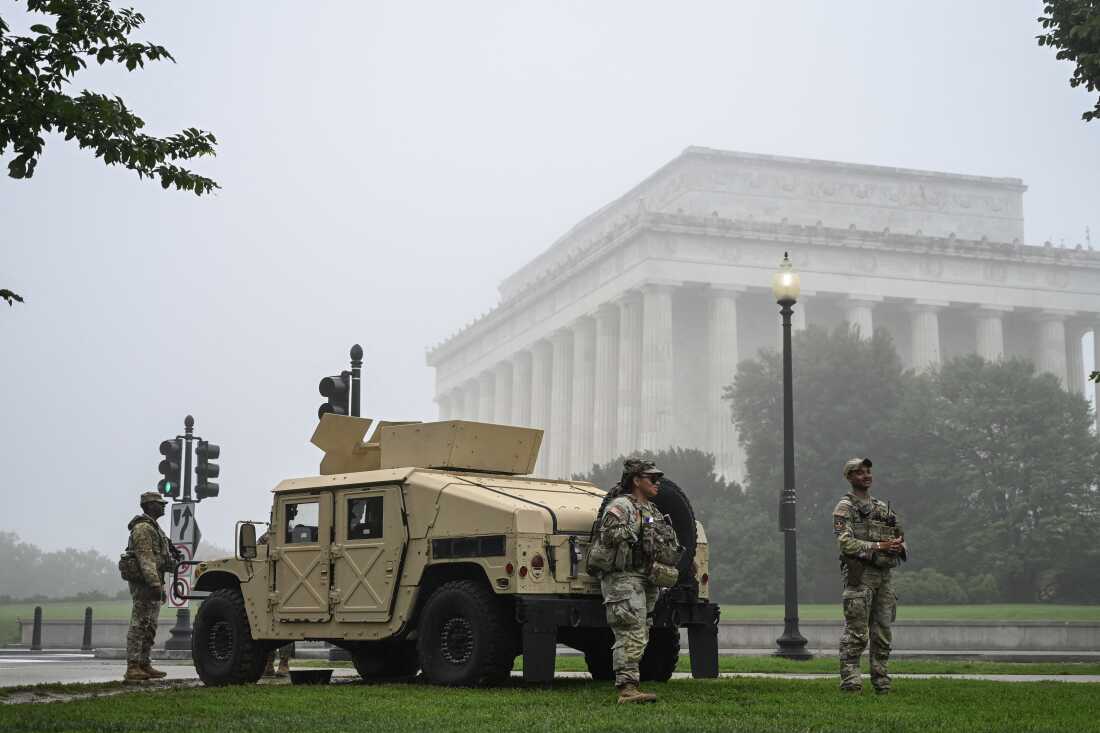
The deployment of National Guard members around the Lincoln Memorial in Washington, D.C. on Memorial Day highlights the increased military presence initiated by President Trump. This presence aims to reduce crime, although its real impact is under scrutiny.
Effectiveness and Costs of Deployment
A recent analysis from the Niskanen Center reveals mixed results. While the deployment of the National Guard has decreased petty property crimes, it has not significantly influenced violent crime rates despite the significant expense incurred by taxpayers. This study follows federal plans to increase troop numbers in Washington, D.C., to 5,000 as part of a “summer surge” aligned with upcoming national celebrations.
Initially, President Trump deployed the National Guard in August of the previous year, as part of his Safe and Beautiful Task Force. This task force collaborates with local and federal law enforcement, aiming to lower crime rates and enhance the city’s aesthetic appeal. While similar strategies are planned for other cities such as Memphis and New Orleans, the authority over the National Guard in D.C. remains uniquely under the president’s control.
Operations and Outcomes
Currently, about 2,800 National Guard members are stationed in D.C., primarily from Republican-governed states. These members lack arrest powers but can detain individuals and are mostly involved in “high visibility patrols” to establish a strong presence. These efforts aim to allow D.C. police to focus on higher-crime areas. However, the Niskanen Center report notes that the resource reallocation these patrols intended to support has not materialized effectively. Researchers identified a 24% decrease in property crimes but no change in violent crime rates, suggesting limits to the strategy’s effectiveness.
The presence of uniformed military personnel visibly affected the city but at a high financial cost. A report from the Congressional Budget Office identified federal costs of approximately $1.5 million daily for the troop deployment. Richard Hahn from the study points out that alternative, more cost-effective policing strategies could yield similar or even improved results.
Official Responses and Future Plans
The White House dismissed critiques of the study. Spokesperson Abigail Jackson emphasized the benefits of reduced crime and enhanced urban beauty thanks to the National Guard’s presence, though evidence was not disclosed.
The timeline for the “summer surge” remains unspecified, with Assistant Attorney General Colin M. McDonald asserting a commitment to maintaining order and safety in the nation’s capital. Efforts to clarify the duration and scale of the surge have yet to receive formal responses from task force representatives.