
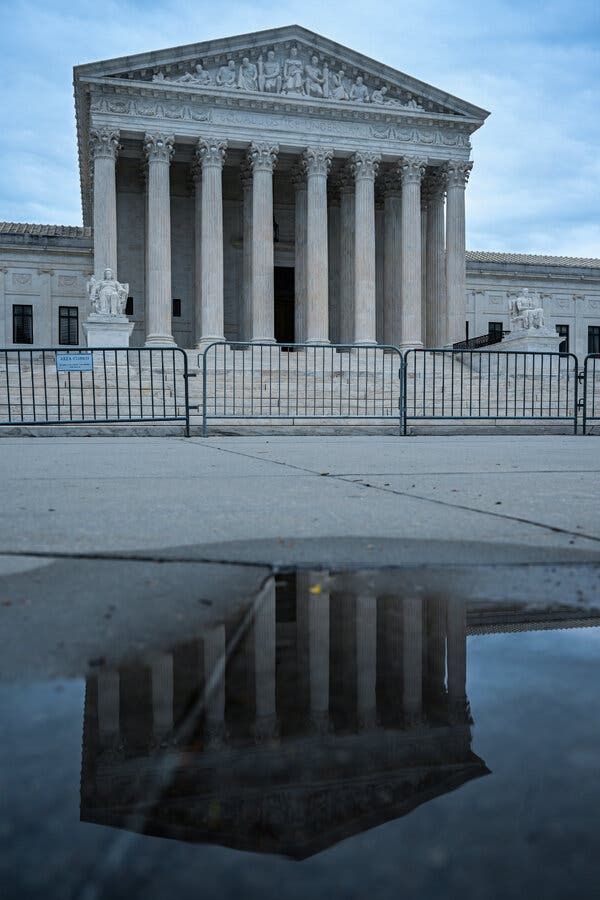
On Tuesday night, the Supreme Court’s conservative majority issued an emergency ruling, providing a glimpse into the handling of future congressional district battles under the Voting Rights Act.
In a February 2025 trial, three federal judges in Alabama examined a proposed congressional district map. The trial involved over 20 witnesses, 40 lawyers, and nearly 800 pieces of evidence. Two of the judges were appointed by President Trump. They determined that Alabama’s Republican-led legislature deliberately discriminated against Black voters. The state had aimed to have only one majority-Black district out of seven, despite more than a quarter of the state’s population being Black. This was seen as an attempt to dilute Black voting strength.
Despite these findings, the Supreme Court allowed Alabama to use the map, citing a “colorblind Constitution.” This decision replaced the current map with one eliminating a majority-Black district. Such a change likely favors Republicans in their effort to maintain a narrow House majority.
This ruling, allowing a map labeled as “tainted by intentional race-based discrimination” by a lower court, has led to questions about when the Supreme Court might invalidate a congressional map as racially discriminatory. It also raises concerns about the federal courts’ role in redistricting.
“The court just seems really hellbent on getting lower federal courts out of any policing of redistricting,” commented Nicholas Stephanopoulos, a Harvard law professor specializing in election law.