
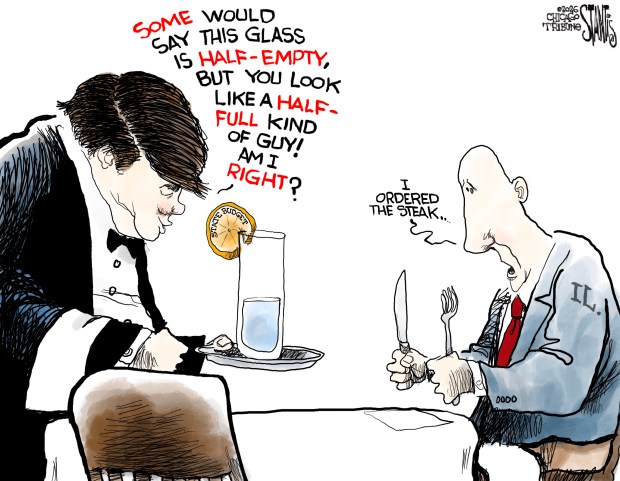
The spring legislative session in Springfield presented two contrasting perspectives. On one hand, disappointment lingered due to several urgent issues left unaddressed. This included the Chicago Bears’ situation, a growing energy imbalance, the need for new housing, and efforts to make life more affordable for Illinois residents.
On the brighter side, the session concluded without significant policy damage. No new substantial taxes on individuals and corporations were introduced. Attempts by progressive lawmakers to impose a constitutional amendment taxing millionaires, potentially driving affluent residents to tax-friendlier areas, were thwarted for now.
Governor JB Pritzker’s maintenance budget received broad legislative support, with some improvements. Local governments statewide benefited from increased income tax revenues, gaining an additional $60 million ($12 million for Chicago). This move countered Pritzker’s proposal to maintain the municipal share of state income tax receipts, preventing further pressure on property taxes that hinder growth in various communities.
The session left an impression of the state lacking vigorous leadership. Democrats, enjoying a supermajority, seemed content to disagree on addressing key issues. Republicans primarily observed, though Peoria Republican Rep. Ryan Spain acknowledged Democrat openness in discussing the spending plan.
Governor Pritzker’s objectives included keeping the Bears in Illinois and expanding statewide housing initiatives. Progress on the Bears’ situation remains uncertain. Housing proposals stalled due to local government objections over zoning authority being superseded by the state. Pritzker’s visible leadership was minimal, relying on lawmakers to act on broad goals.
State representatives from Chicago, alongside Mayor Brandon Johnson, effectively hindered the plan to retain the Bears. Suburban officials resisted housing initiatives, protecting local powers and reassuring residents against undesired developments without local oversight.
No strong message was conveyed that Illinois residents are united in facing these challenges.
The session lacked action on the impending electricity supply crunch. This issue intensified with data center proposals and past clean-energy policies incentivizing removal of vital power sources in northern Illinois. Simple amendments to Pritzker’s 2021 Climate & Equitable Jobs Act were suggested to maintain consistent electricity supply and control rising bills, yet Democrats took no steps.
Nevertheless, accomplishments were noted. The budget supported state pension obligations and increased public school funding by $350 million, maintaining long-standing policy. Pritzker’s call to ban cellphones in public-school classrooms was passed. Measures regulating artificial intelligence usage were approved. After years of delay, hemp maker licensing was established, addressing the sale of THC-infused products across various outlets.
Efforts toward affordability, emphasized by Pritzker, House Speaker Emanual “Chris” Welch, and Senate President Don Harmon, remained modest. Lawmakers postponed a gas tax increase by 1.3 cents per gallon. A one-time $400 payment was designated for those facing significant SNAP benefit reductions due to GOP policies in Washington, funded at $70 million to state taxpayers.
Some narrow tax increases, like a digital ad tax and social media platform levy, were introduced to support the maintenance budget. By Democratic Party measures in Springfield, this session wasn’t tax-heavy.
The 2026 spring session will likely be remembered for its inaction. Illinois residents, intrigued by the Bears’ situation, got a glimpse into how Springfield operates under full Democratic Party control.
Submit a letter, of no more than 400 words, to the editor here.