
The necklace around Santiago García’s neck carried no religious symbols, yet held profound significance. Years ago, when García’s grandmother was in intensive care, he draped his cherished Boca Juniors necklace around her neck, believing in its power. “Boca will save you,” he whispered. Remarkably, she recovered, and the necklace found a new home with her.
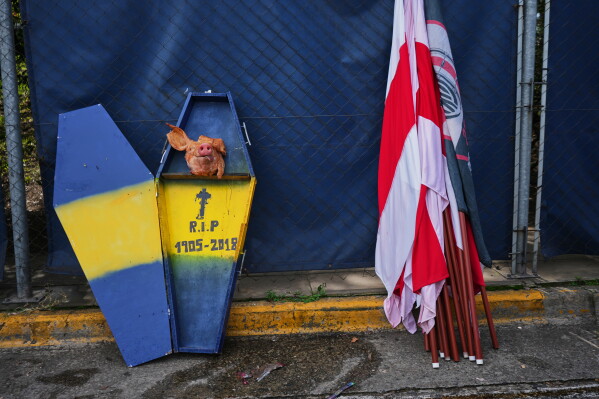
García embodies the deep connection to soccer shared by millions across Latin America, especially as the region gears up for the 2026 World Cup. From Argentina to Mexico, passion for soccer intertwines with daily rituals and beliefs. In Buenos Aires, a highway display featured a cardboard coffin in Boca Juniors’ colors beside River Plate flags, emphasizing the depth of Argentina’s soccer rivalry.
“The emotional bond with soccer teams has a long history,” said Mexican analyst Erick Fernández. This connection fosters identity and a sense of belonging, uniting people through a shared sporting journey.
In Argentina, where Lionel Messi hails from, love for soccer often runs in families, growing stronger with each generation. Pope Francis, an Argentine and lifelong San Lorenzo supporter, has expressed admiration for soccer’s collective spirit.
García’s Boca Juniors devotion passed down from his father. His mother, initially a fan of a different team, switched allegiances after meeting García’s father. “You often support your parents’ teams,” García noted. Soccer becomes an identity one carries throughout life.
At 17, García tattooed lyrics from Boca Juniors’ anthem on his torso. Even 14 years later, the words are as significant as when the ink was fresh. “The chant is like a rallying cry for us,” he explained.
The Power of Belonging
Pope Francis likened soccer to a beautiful team sport enriched by its collective nature. Among fans, passion and community go hand-in-hand. Anthem singing, shared celebrations, and commiserations after losses create a collective experience similar to communal devotion.
Anthropologist Eloísa Martín emphasized the role of community in soccer fandom. “Communitas, akin to religious gatherings, thrives when fans unite,” she noted.
While this sense of unity can foster camaraderie and support, it can also provoke rivalry-driven conflict. Yet, it creates community for those who might lack one. Argentine soccer events unite fans across cities, creating powerful bonds.
Adilvania Santos, a Fluminense fan from Rio de Janeiro, described her soccer passion as vital. Soccer served as a source of strength during difficult times. “For us, supporting Fluminense is sacred,” she said.
Attending matches is a priority for Santos, despite living far from Rio. At home, she isolates herself to fully concentrate on games without interference.
“Soccer moves Brazilians profoundly, fostering identity and hope,” stated Catholic priest Jeferson Mengali, a Corinthians supporter. “Amid hardships, soccer becomes a space for collective joy.”
Rituals for Victory
Mengali’s service as Corinthians’ chaplain included celebrating Masses and witnessing team practices. “Prayer before crucial games is customary for serenity, not just victory,” he explained.
Soccer fans often turn to rituals, called “cábalas” in Argentina, hoping to influence game outcomes. Popularized in the 1990s, these rituals vary widely. They might involve drinking from a specific cup, sitting in a particular spot, or wearing certain items during every match.
Fans repeat successful rituals and abandon them if their team loses. Rituals may even involve avoiding matches, perceived as a sacrifice to secure victory.
At García’s home, his father sits in a particular chair when Boca plays well. If the opponent scores, he changes seats. His mother, on the other hand, chooses house cleaning while periodically asking about the score.
García’s current cábala involves wearing the same jersey all season and keeping a small picture of Diego Maradona close. “After his death, he quickly became a revered figure,” García said. “He became more than just a sports legend.”
Saints of the Stadium
In Argentina, Diego Maradona is known as “El Diego.” Fans refer to him as they would a family member or close friend. “Maradona is the player, ‘El Diego’ is the familial figure people turn to,” Martín explained.
While legends like Maradona and Brazil’s Pelé are globally recognized, soccer fans also cherish personal idols. In Chile, Héctor Hermosilla treasures a portrait of Colo Colo founder David Arellano. Before matches, Hermosilla bids farewell to this image, seeking reassurance.
Hermosilla recounted his first Colo Colo match in 1986, captivated by the stadium’s atmosphere. Since then, he’s remained a devoted supporter, traveling extensively to follow his team. To fund these trips, Hermosilla once typed out Colo Colo anthems and sold photocopies, earning him the nickname “Nano Fotocopia.”
Adapting to changing times, Hermosilla now sells accessories instead. His match-day routine includes seeking Arellano’s blessing, packing goods to sell, and joining fellow fans at a local restaurant. “He guides us like a deity,” Hermosilla described.