
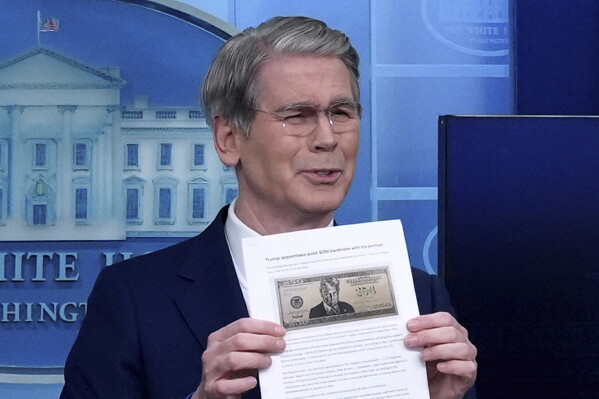
The U.S. government, led by President Donald Trump, faces increased difficulty in borrowing funds, resulting in higher interest rates that impact economic affordability and growth. This development poses a risk for Republicans in the upcoming midterm elections. The Iran war’s influence on energy prices is also affecting bonds funding the U.S. government. The 10-year U.S. Treasury note’s rates have risen to 4.44%, up from 3.95% before the conflict. Mortgage rates are at their highest in nine months, and auto sales are declining.
Globally, interest rates are climbing as nations adjust to potential inflation, concerns over government debt sustainability, and a surge in investment in artificial intelligence. Trump assures Americans of his plan to reduce the $1.8 trillion budget deficit, citing tariffs, foreigner visa fees, spending cuts, and economic growth. He highlights the fraud task force led by Vice President JD Vance as essential for achieving budget balance.
“If he does really great, we’ll have a balanced budget without having to do anything,” Trump said.
Economists question the feasibility of Trump’s deficit reduction strategies. Annual debt servicing costs have surged to over $1 trillion since 2021, according to Jessica Riedl from the Brookings Institution. She notes that Trump’s tax cuts could add $5 trillion to 10-year deficits, while tariffs offset minimal costs. Projections still show deficits exceeding $4 trillion annually within a decade due to Social Security and Medicare obligations.
The 10-year U.S. Treasury rate peaked at 4.67% in May but eased as Iran ceasefire negotiations progressed. Rising 30-year Treasury yields are largely driven by expected continued borrowing and inflation from the Iran conflict and tariffs, says Kent Smetters of the Penn Wharton Budget Model.
Glenn Hubbard, former White House economic advisor, worries about the U.S.’s diminished borrowing capacity for economic crises comparable to 2008 or the coronavirus pandemic. Hubbard, now a Columbia Business School professor, expressed concern over the lack of innovative solutions in Washington.
Democratic candidates are using these higher interest rates as a campaign point against Republicans, highlighting how deficits and rates hinder home ownership, car purchases, and managing credit. In Colorado’s fifth congressional district, Democrat Jessica Killin targets Republican Rep. Jeff Crank, arguing that Trump’s policies contradict his rhetoric on balancing the budget.
The Trump administration plans to gradually reduce budget deficits. Lower tariff revenues affected past deficit reductions. Treasury Secretary Scott Bessent referenced potential savings of up to $500 billion annually from reducing fraudulent government spending, based on a Government Accountability Office report estimating large pandemic-era fraudulent spending.
Bessent attributes inherited budget issues to former President Joe Biden’s administration. He aims to cut the annual deficit to 3% of U.S. GDP, though the timeline remains unspecified. Meanwhile, stock markets gain value, signaling investor confidence, but interest rate hikes suggest concerns over national debt as a vulnerability.
Economists believe financial markets could pressure policymakers to address systemic deficits sooner than voter influence. Hubbard stresses that the bond market’s foundation lies in repayment trust. The term “credit” shares roots with the Latin word for creed, emphasizing belief in repayment.
“That is what debt is about: I believe you will pay me back,” Hubbard said. “That works until it doesn’t.”